
Robert Reid
The Other man
Bringing Robert Reid Back To History
History is shaped not only by the stories we remember, but also by the ones we forget.
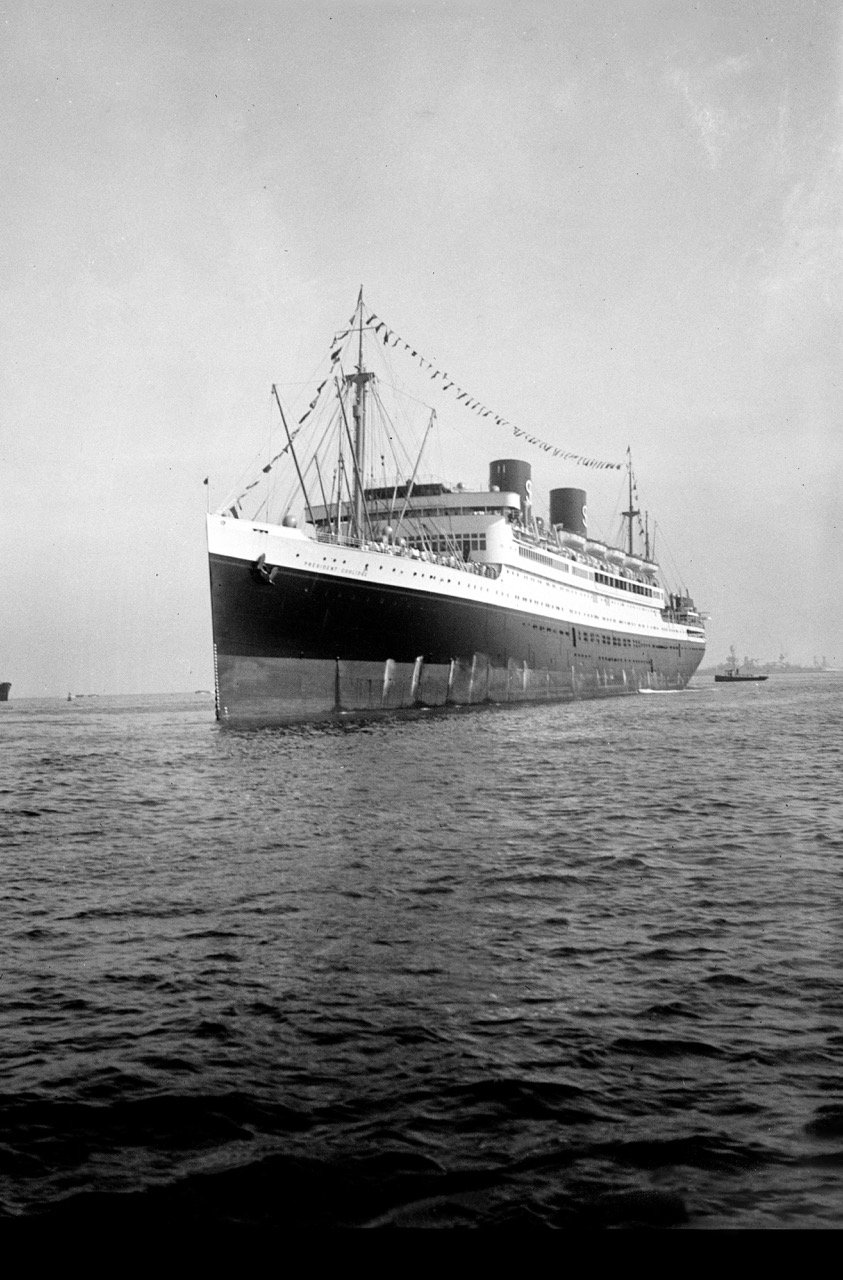
For decades, the story of the sinking of the SS President Coolidge has centred almost entirely on the heroic actions of Captain Elwood J. Euart. Yet another man also lost his life that morning off Espiritu Santo — Merchant Marine fireman Robert W. Reid.
Unlike Euart, Robert Reid quietly disappeared from the historical record. There were no photographs, no biography, and little more than a name attached to the tragedy.
What followed was a year-long effort by Museum Project Manager Jimmy Carter to uncover the man behind that missing name — a journey through archives, military files, family histories and international research that would ultimately restore Robert Reid to memory.
The Missing Name
The search began in late 2024, when Jimmy realised that despite the countless accounts written about the sinking of the President Coolidge, very little was known about Robert Reid — the only other man who died in the disaster.
“Elwood J. Euart is rightly remembered for his extraordinary bravery,” Jimmy explains. “But Robert Reid had almost vanished from history entirely. He didn’t die in a dramatic act of visible heroism, but he still lost his life in service during the war. He deserved to be remembered too.”
At first, the trail was incredibly thin. Online references were brief and repetitive, offering almost no personal information and not a single photograph.
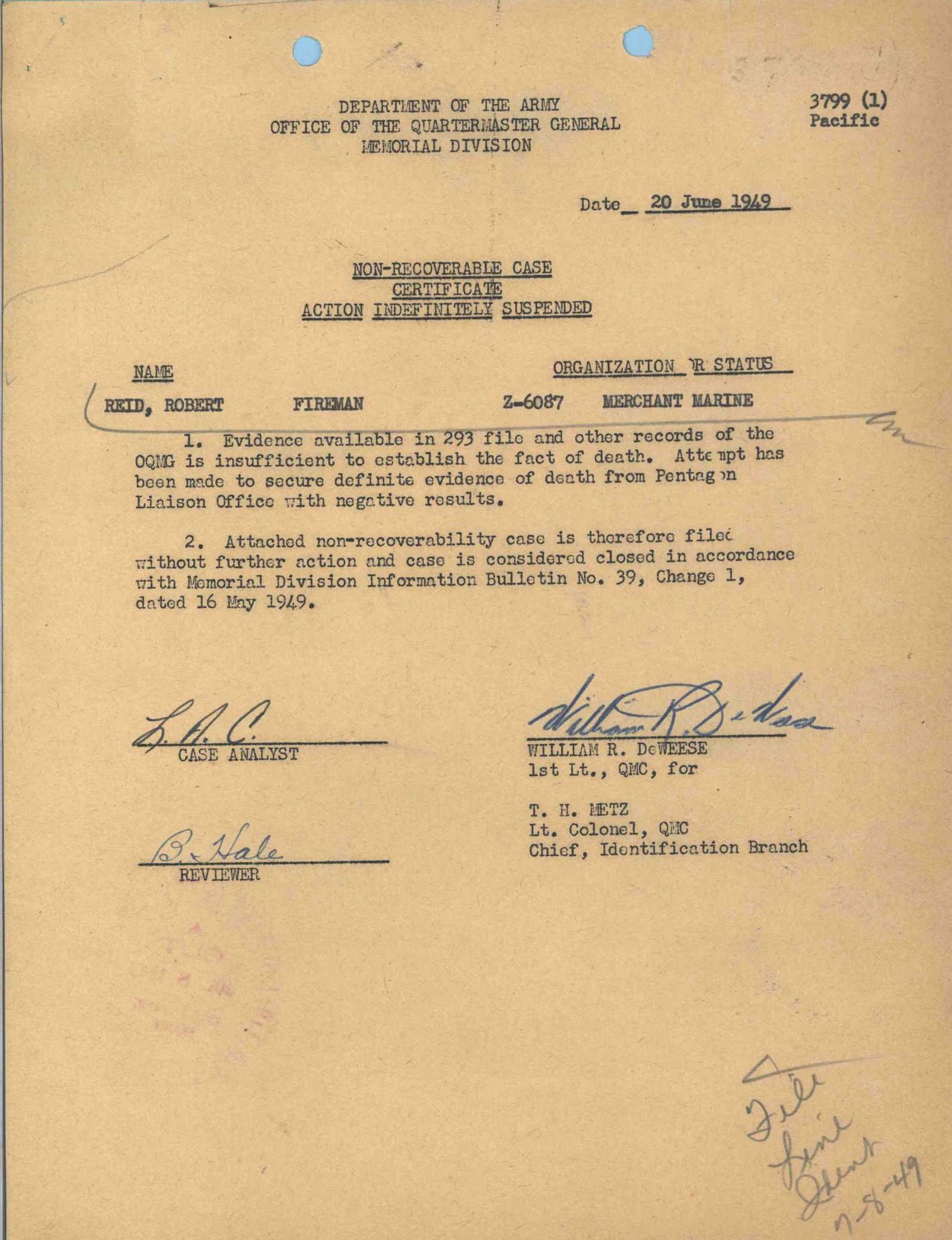
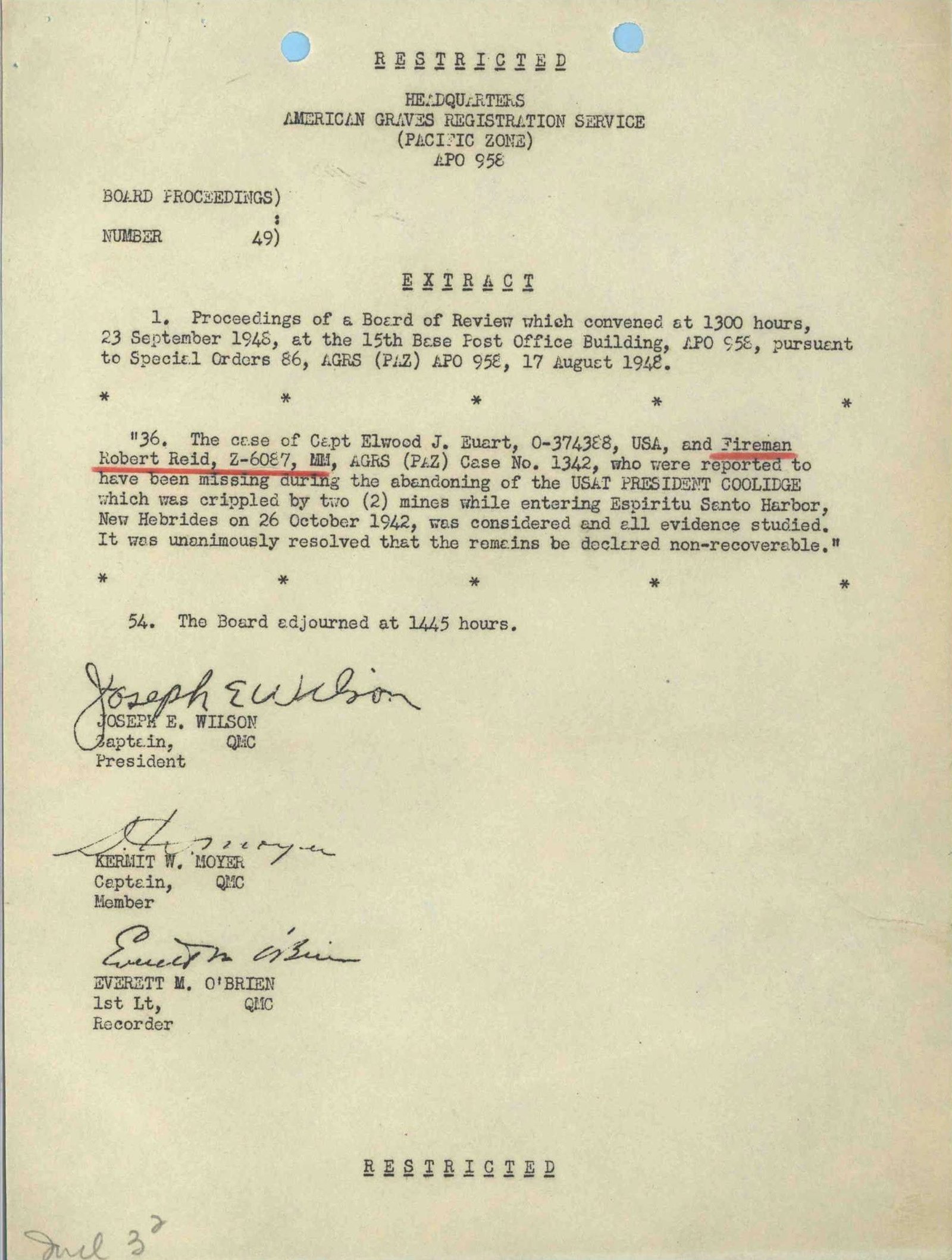
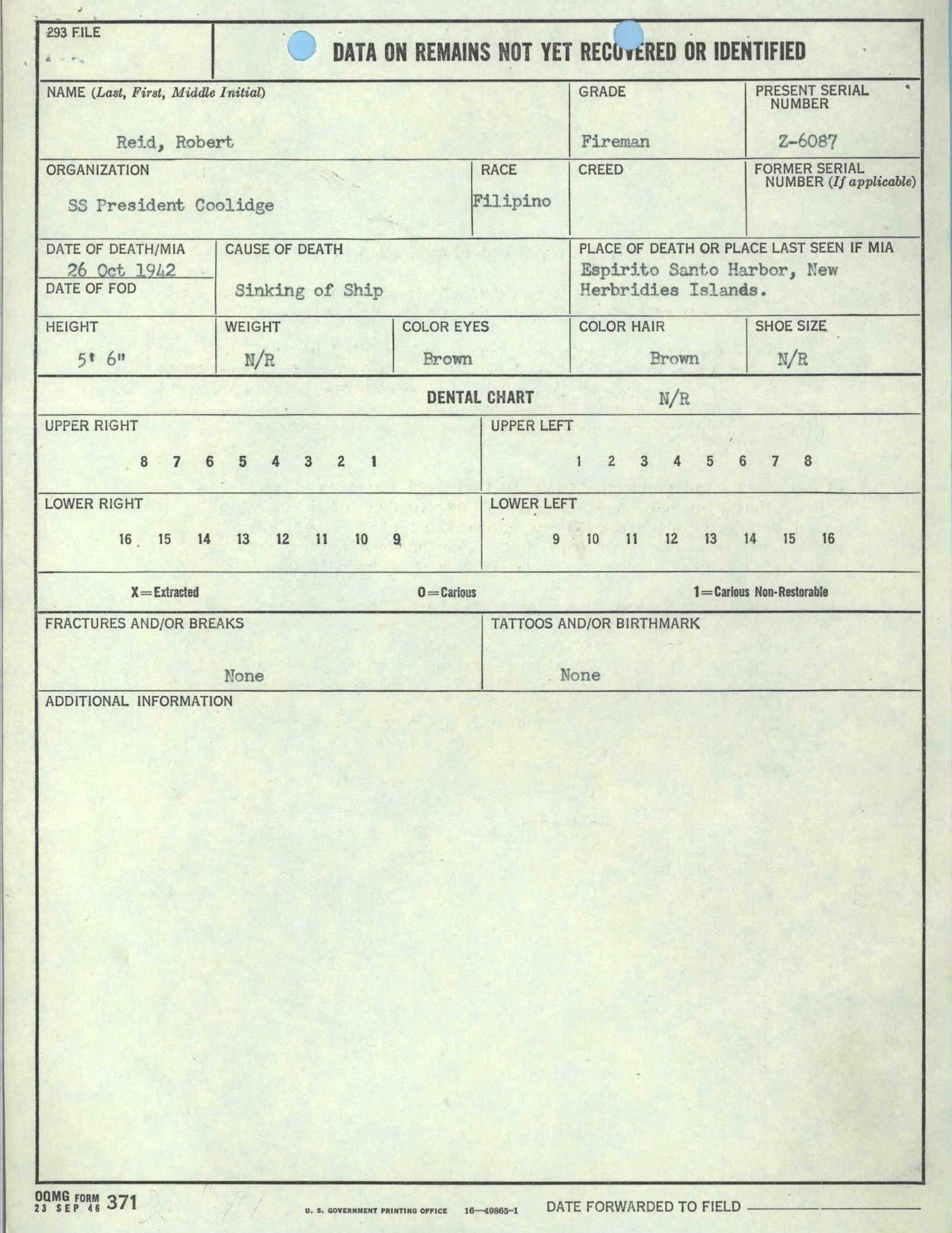
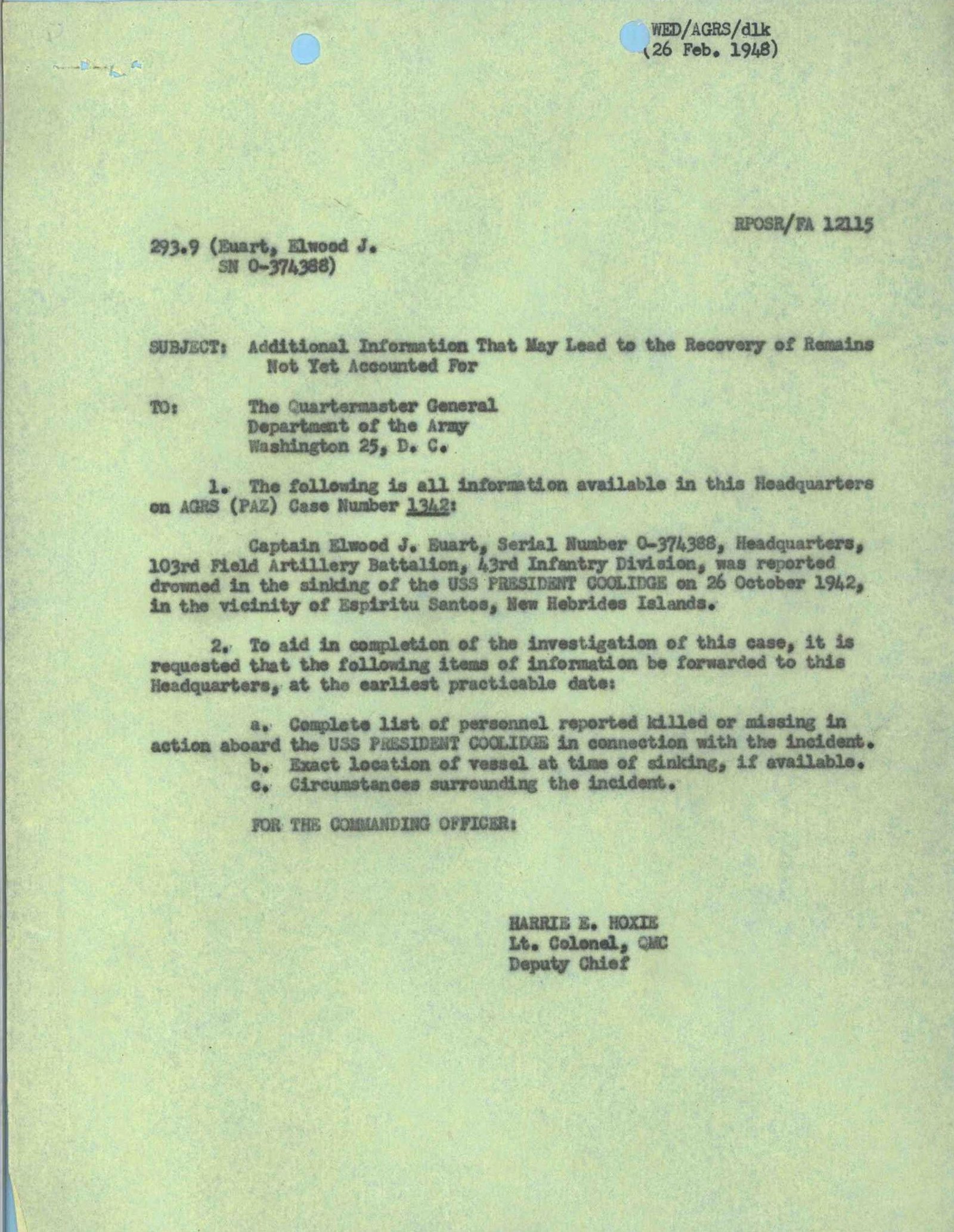
The breakthrough finally came when the Museum obtained Individual Deceased Personnel Files relating to those who lost their lives around Santo during World War II. Among them was a file for Robert W. Reid.
At last, the search had something tangible to build upon.
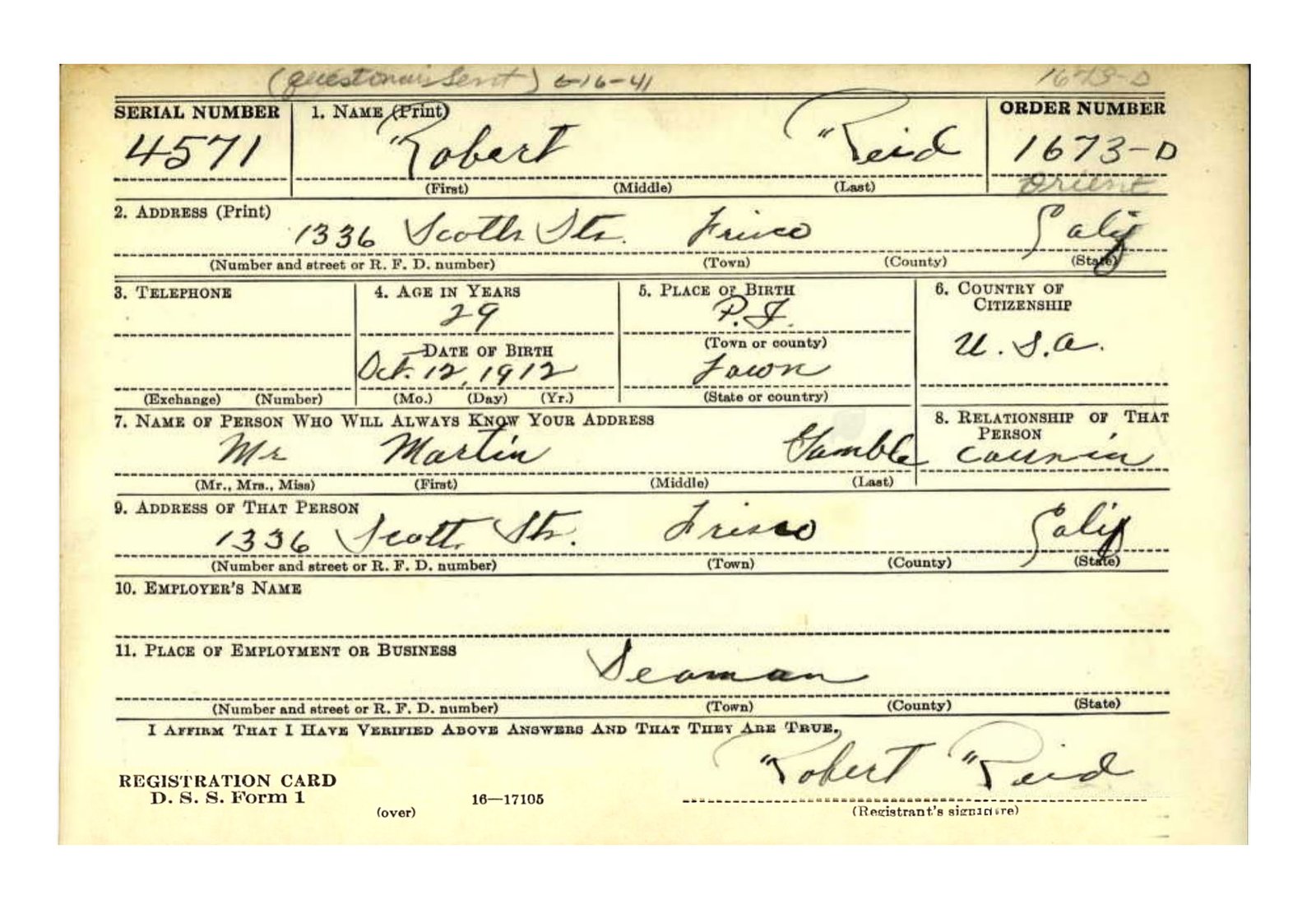
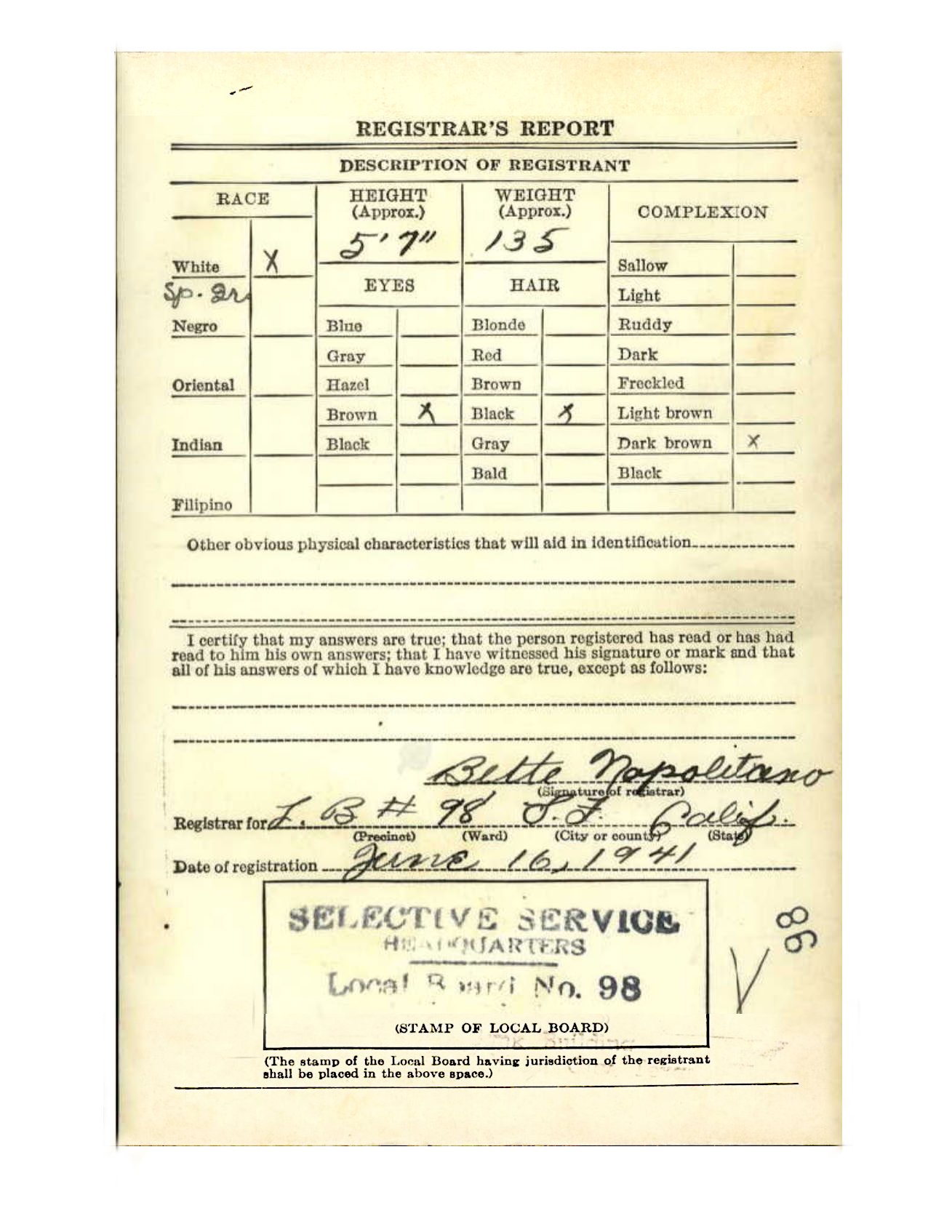
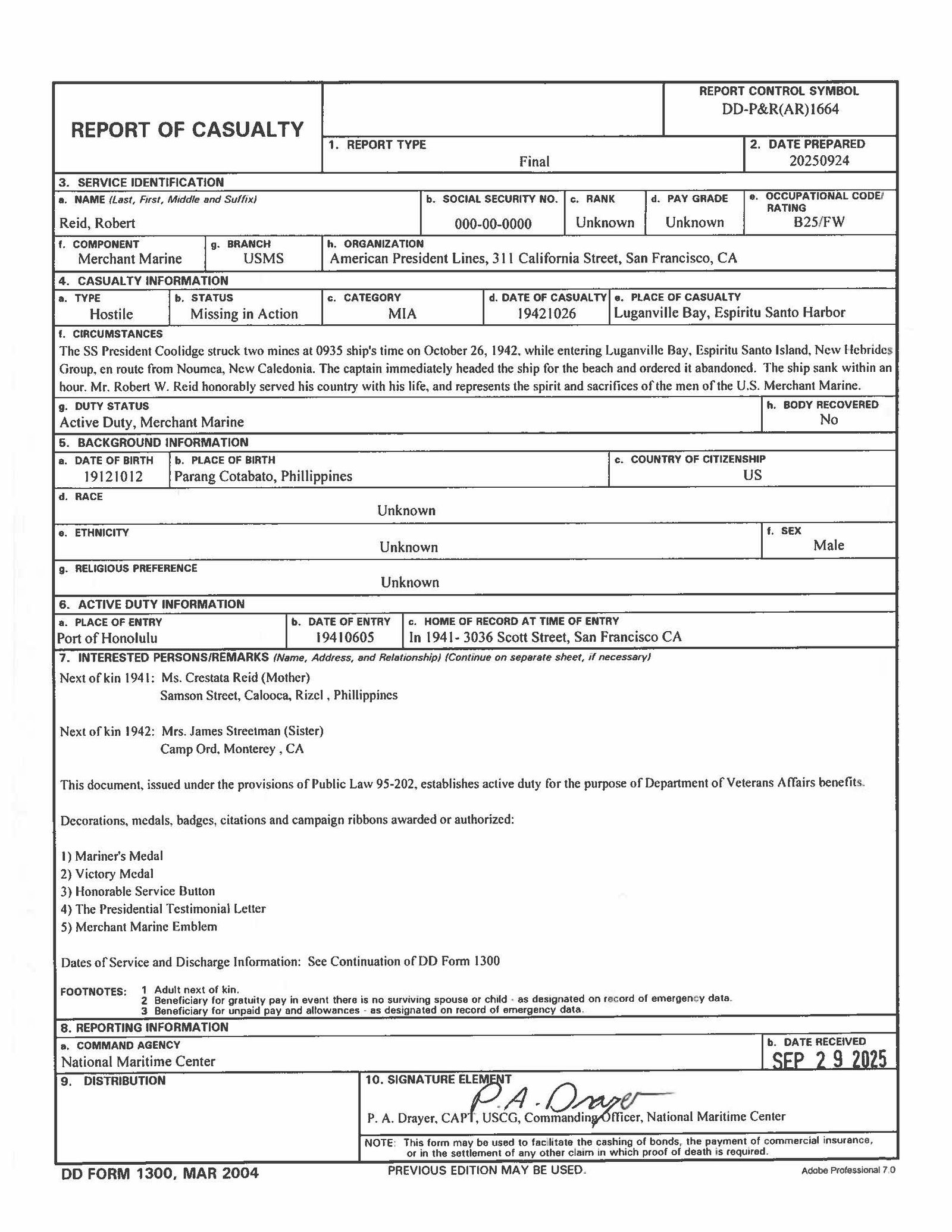
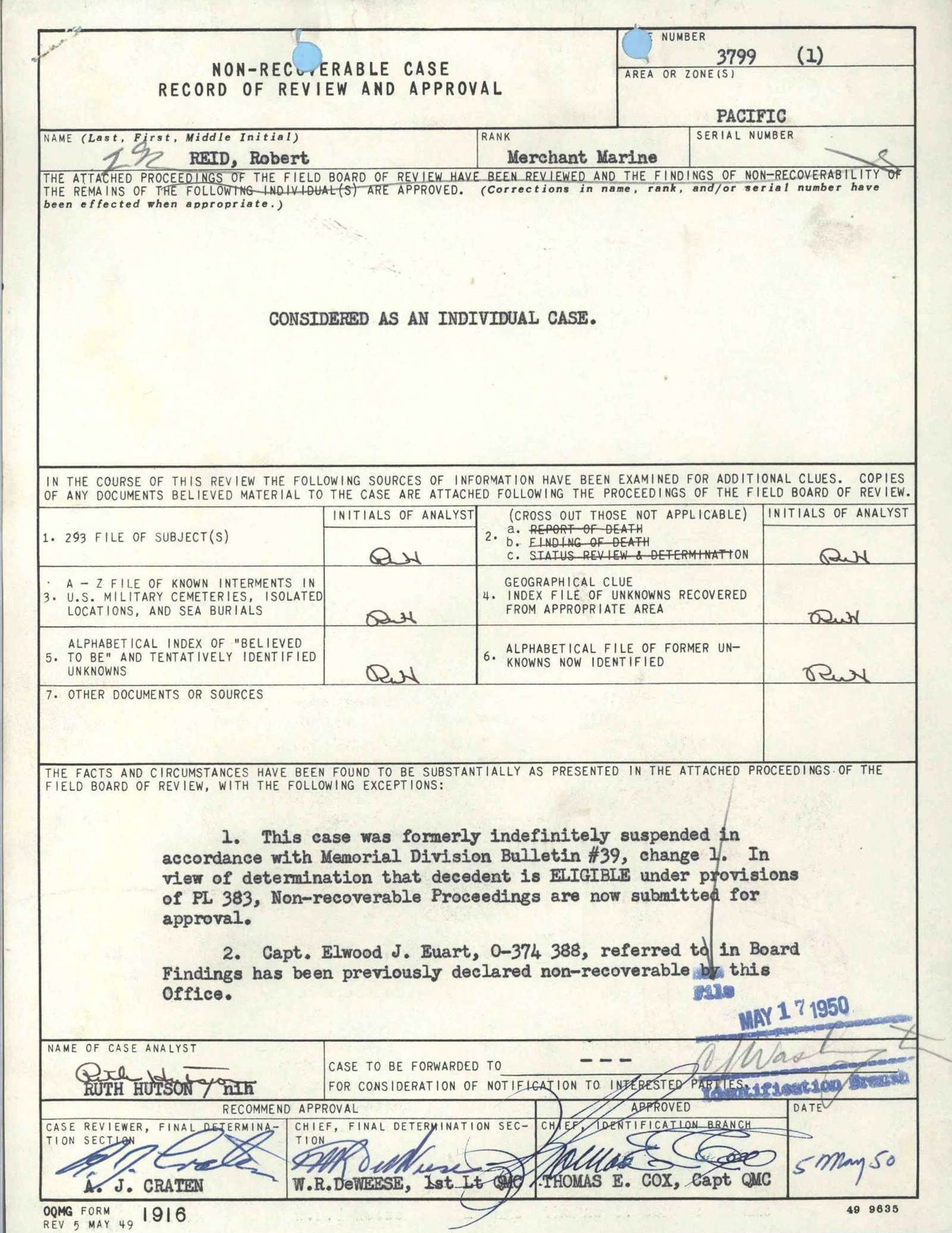
Following The Trail
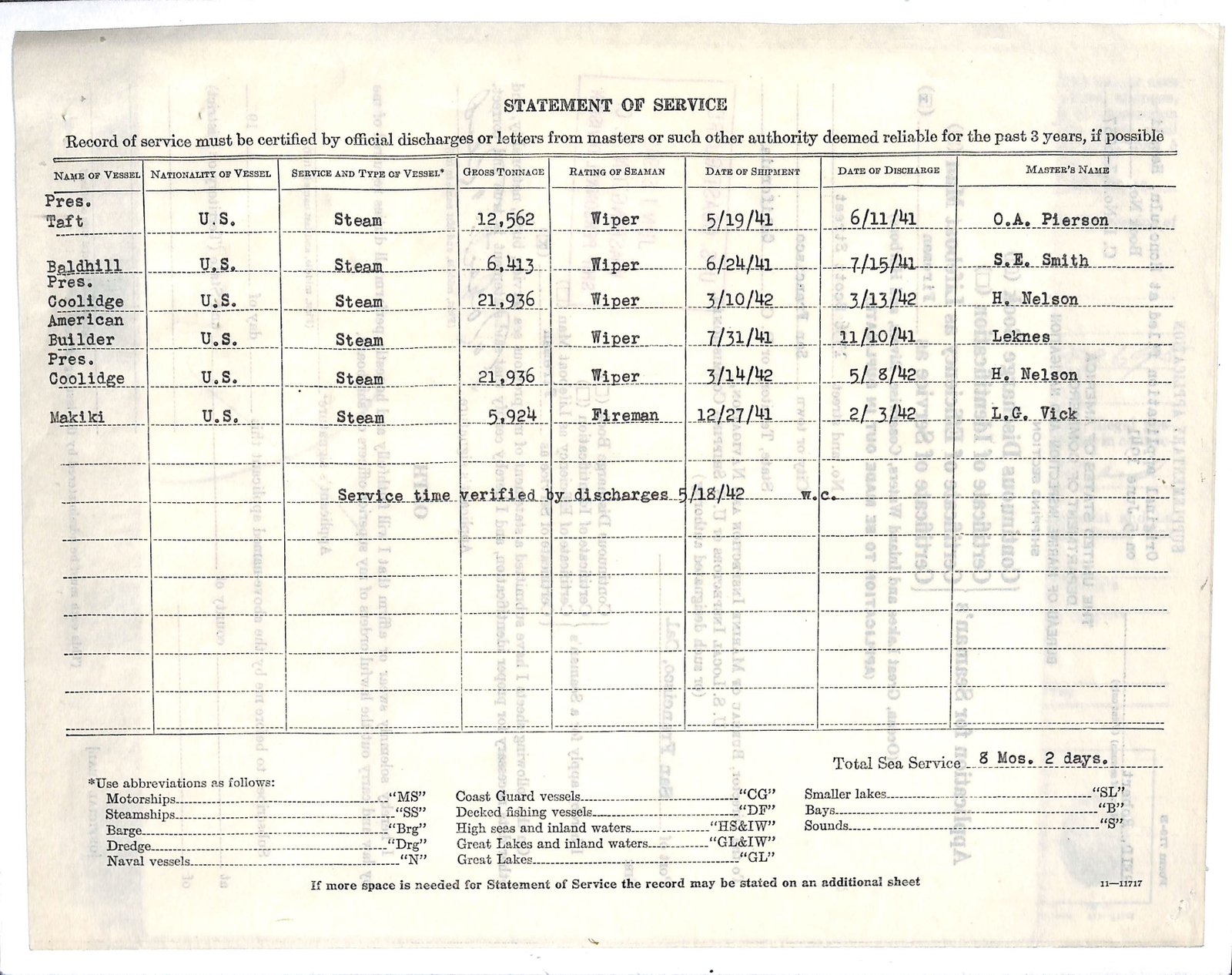
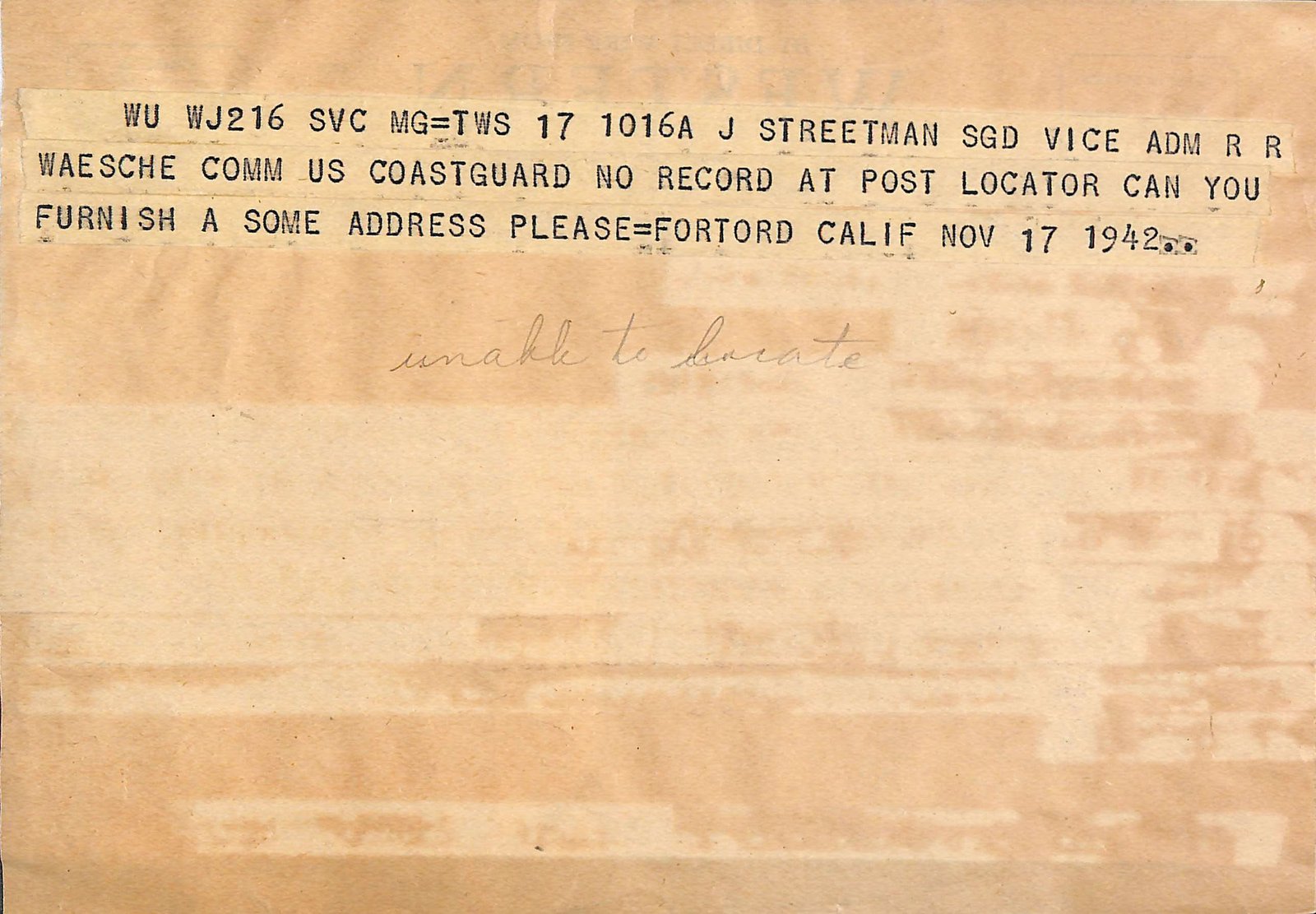
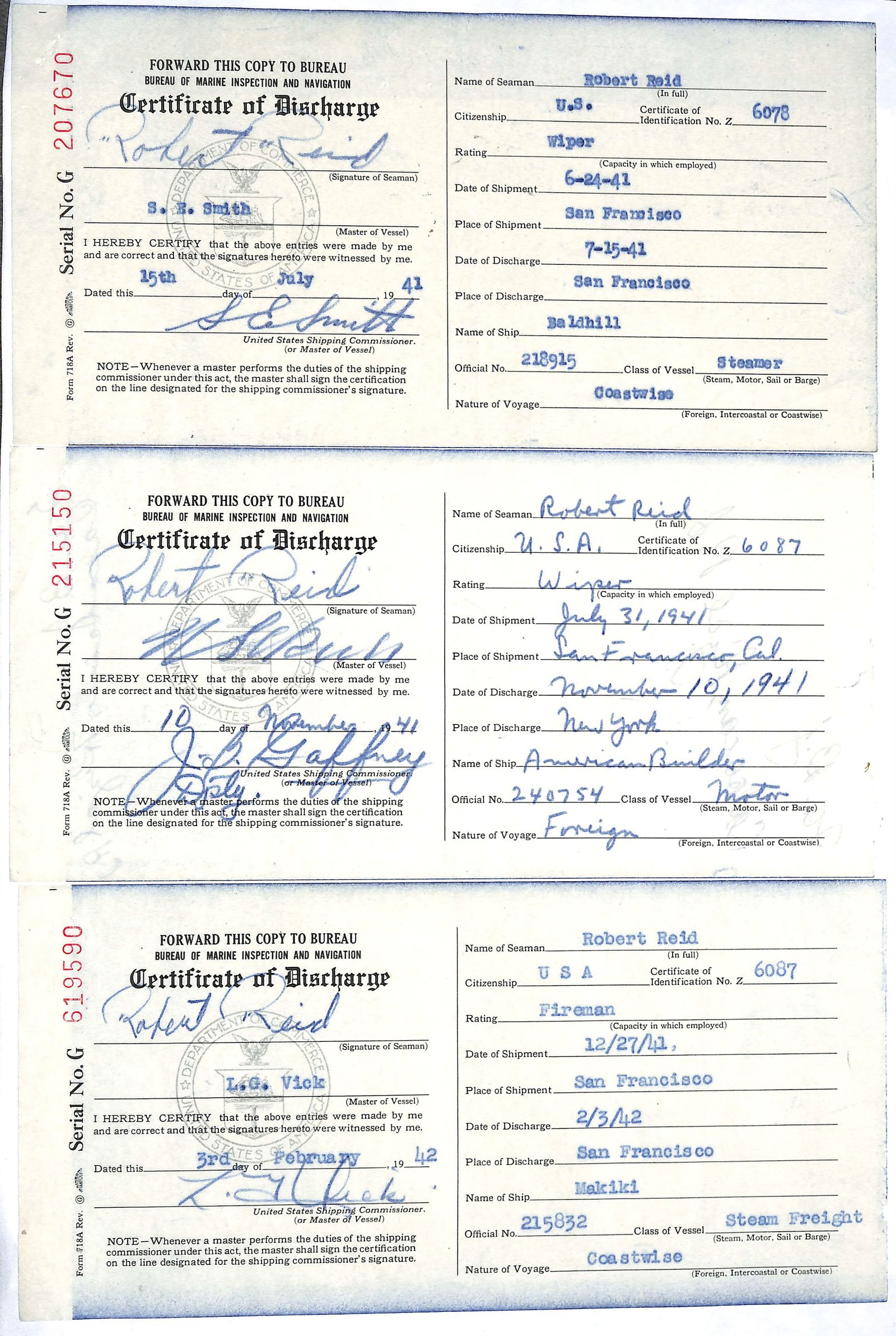
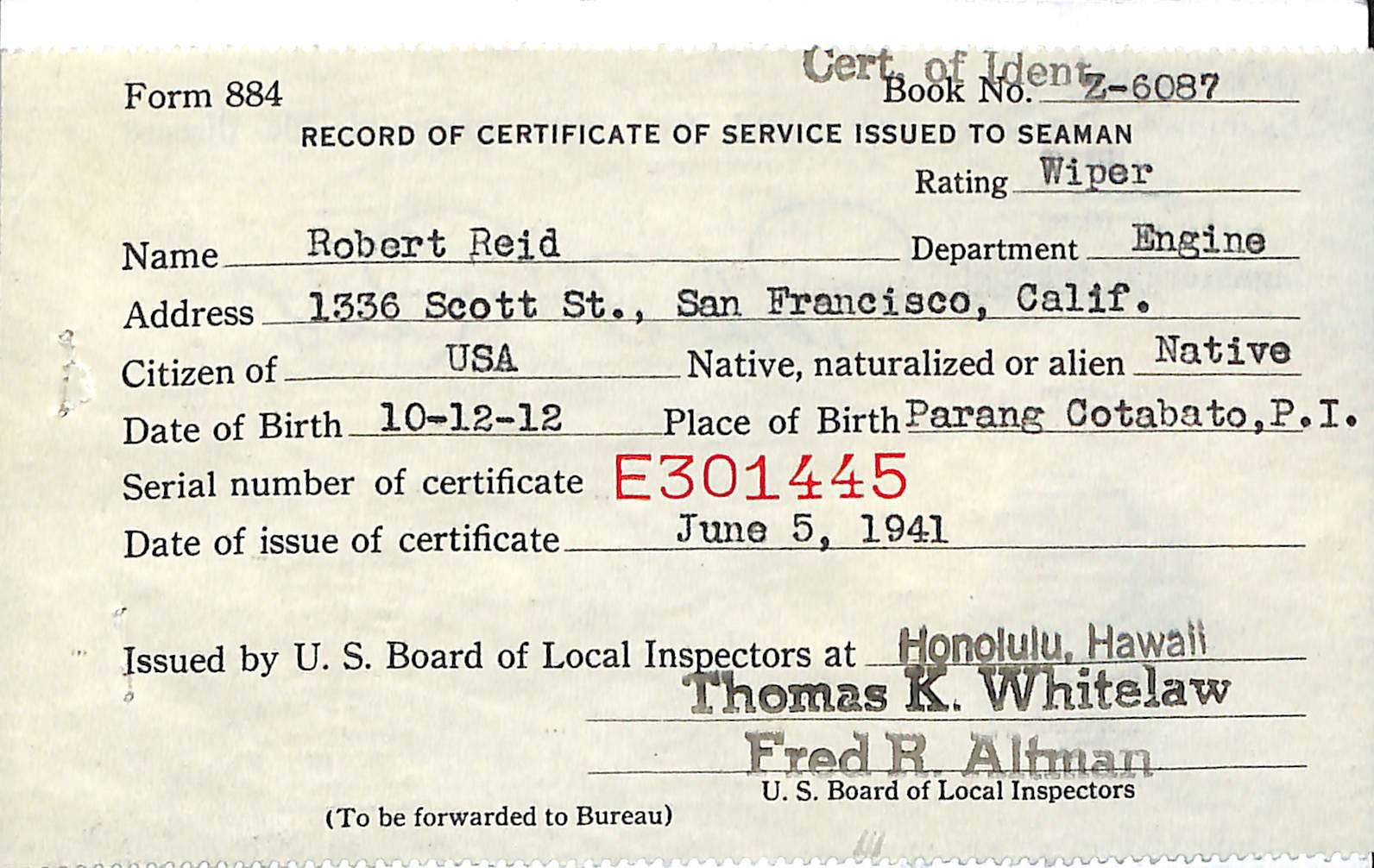
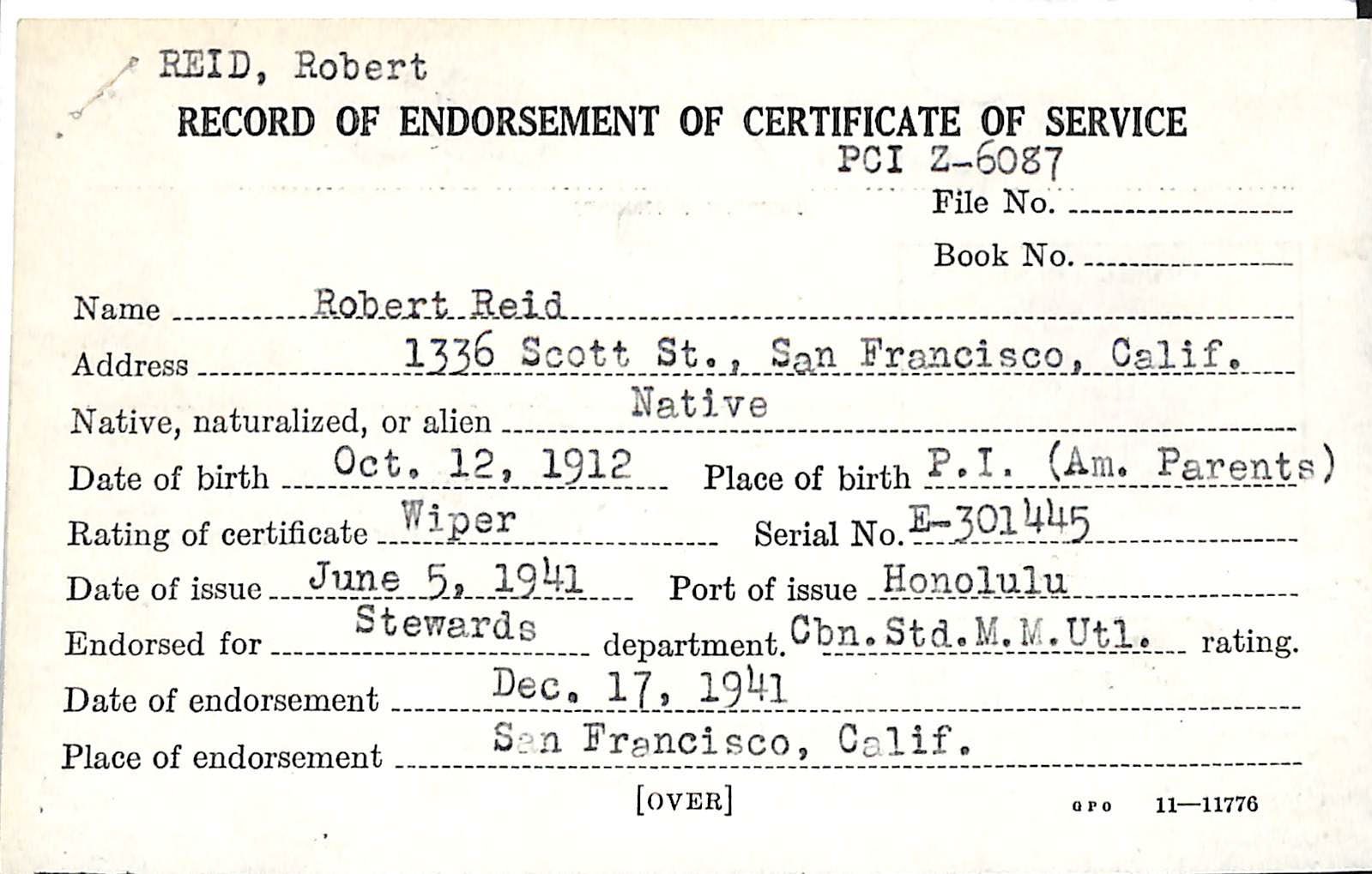
The newly discovered files revealed that Robert Reid was a Merchant Marine Fireman, serial number Z-6087, and identified him simply as a “Philippine National.”
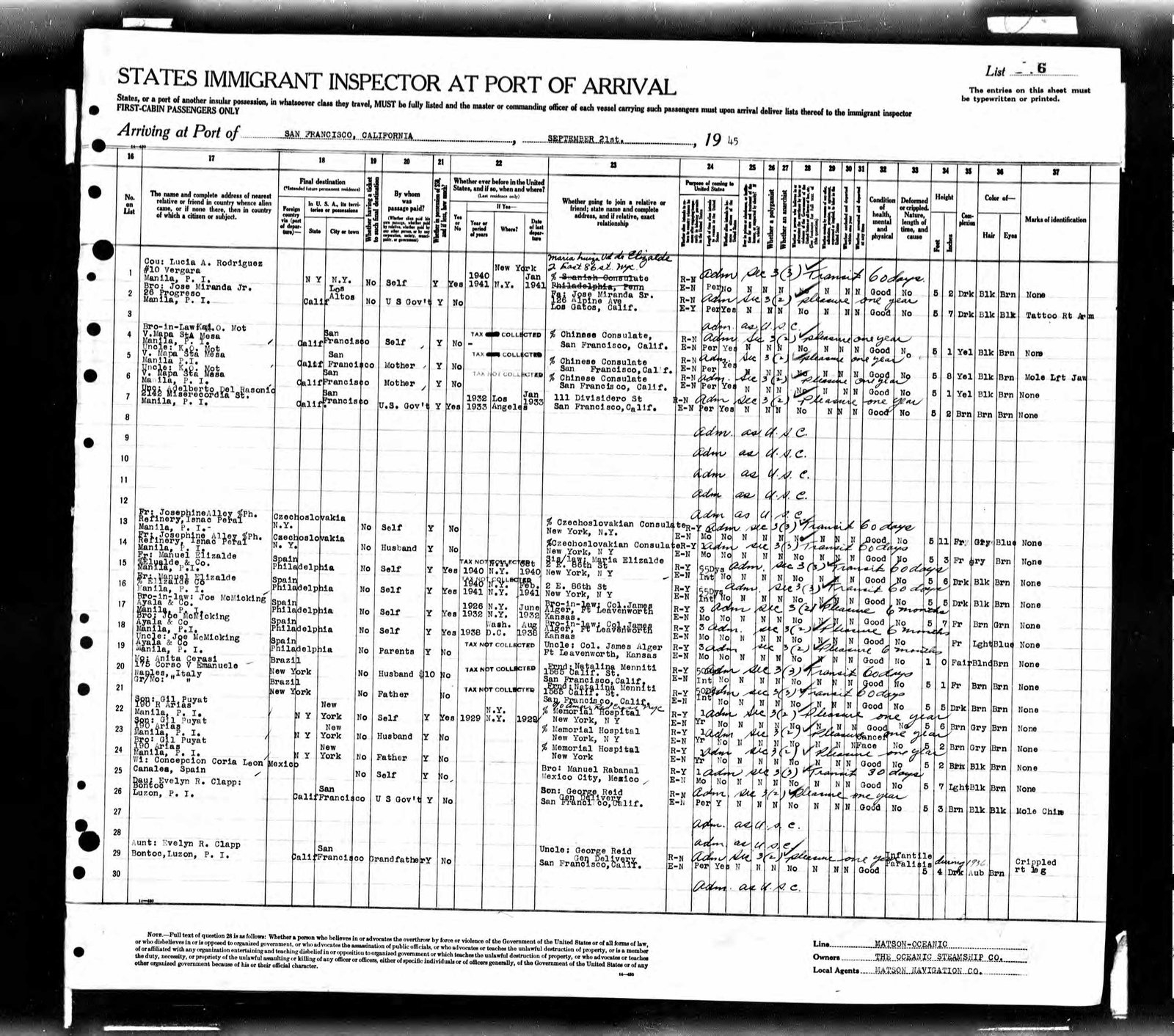
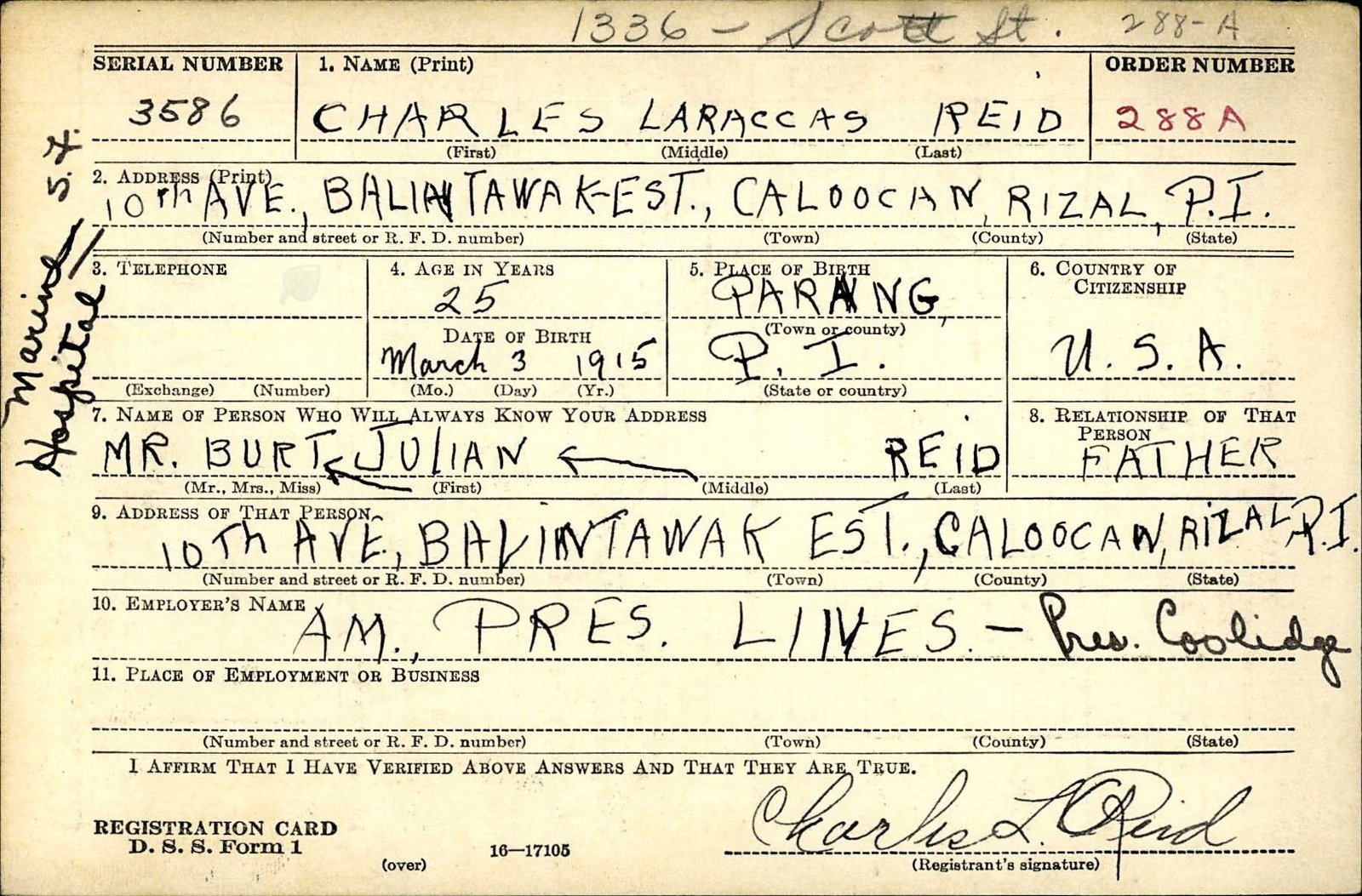
Further research through Merchant Marine records and United States Coast Guard files slowly began revealing more details. Robert’s home of record was listed as San Francisco. His birthplace was identified as Parang, Cotabato in the Philippines, while surviving family connections stretched between the Philippines and California.
The search eventually led Jimmy to the Monterey County Historical Society in California, where volunteer researcher Shelley McFadden undertook extensive genealogical research into the Reid family.
What emerged was an extraordinary family story shaped by military service, migration and war.
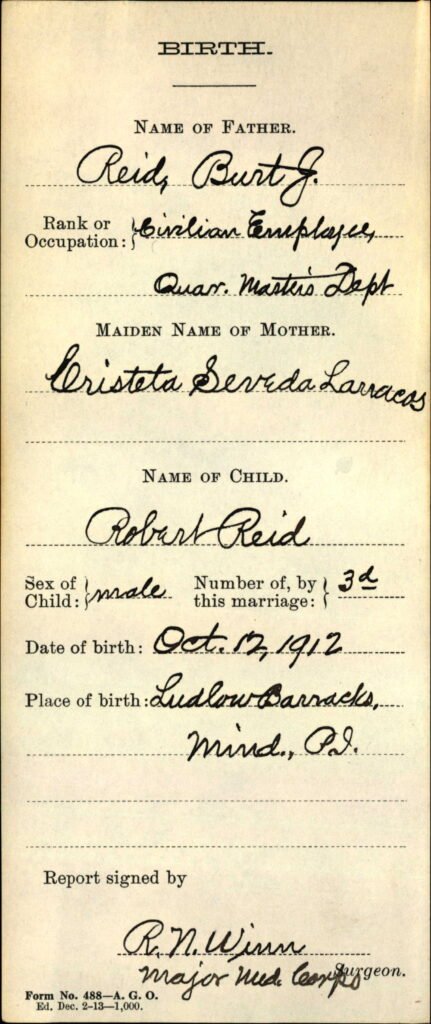
Robert was born on 12 October 1912 at Ludlow Barracks in Mindanao. His father, Burt Julian Reid, was a veteran of the Spanish–American War who remained in the Philippines afterwards as a civil engineer. Robert grew up as part of a large family whose lives would span continents and multiple wars.
One brother would later be killed serving in Europe during World War II. Several sisters married military officers. The family’s story became deeply intertwined with the conflicts of the twentieth century.
Suddenly, Robert Reid was no longer simply “the other casualty” from the President Coolidge. He had become real — a son, brother and member of a remarkable family touched profoundly by war.
Finally, A Face
Even with the growing mountain of research, one crucial piece remained missing: a photograph.
The breakthrough finally arrived when the National Archives and Records Administration responded to a long-awaited records request submitted by the Museum.
Thirty-three pages of material arrived.
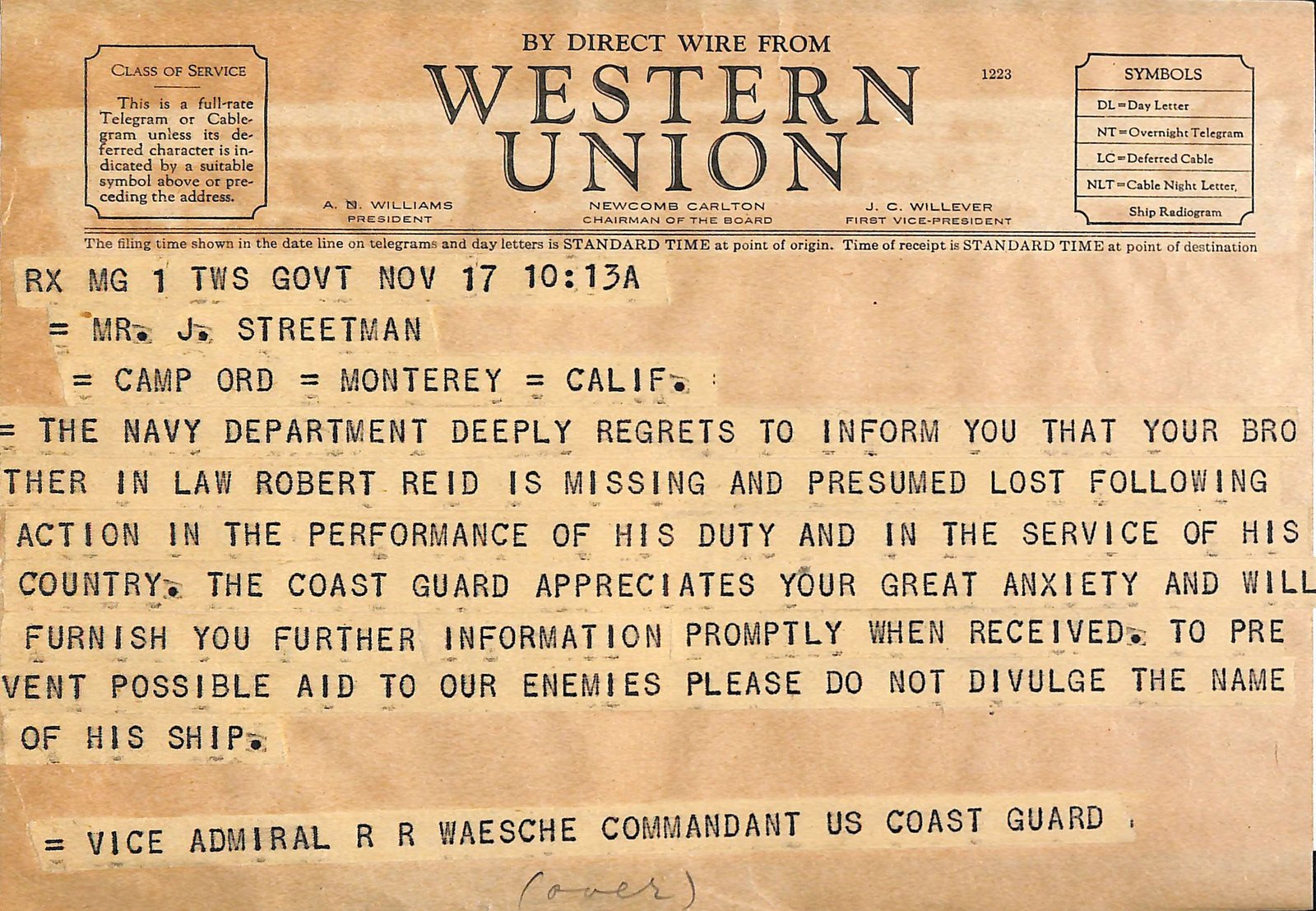
Discharge papers. Medical records. Service documents. Telegrams.
And finally — two photographs of Robert Reid.
“After more than a year of searching, suddenly there he was,” Jimmy recalls. “A face looking back at us from history. It stopped me in my tracks. Robert Reid was no longer just ‘the other man’ who died on the Coolidge. He was someone’s son, someone’s brother — a real person whose story deserved to be told.”
For Jimmy, the discovery was never about rewriting history.
“It was about completing it.”
Restoring A Forgotten Story
The South Pacific WWII Museum will now create a dedicated display honouring Robert W. Reid within the Museum’s SS President Coolidge exhibition area.
For the first time, visitors will be able to see Robert’s face, learn his story, and understand that two men lost their lives when the Coolidge sank off Santo in October 1942.
More than anything, the project serves as a reminder that history is not made only by famous names or dramatic acts of heroism. It is also shaped by quieter sacrifices — by ordinary individuals whose stories deserve to be remembered with equal dignity and respect.
After more than eighty years, Robert Reid is finally returning to history.
Acknowledgements
The South Pacific WWII Museum extends its sincere thanks to everyone who contributed to the research behind this project, particularly Shelley McFadden of the Monterey County Historical Society; Micah Mallory; Autumn Burkholder of the United States Coast Guard National Maritime Centre; and George Fuller from the National Archives and Records Administration.
Through their extraordinary assistance and generosity, a forgotten seaman has finally been brought home — not to a grave, but to memory.