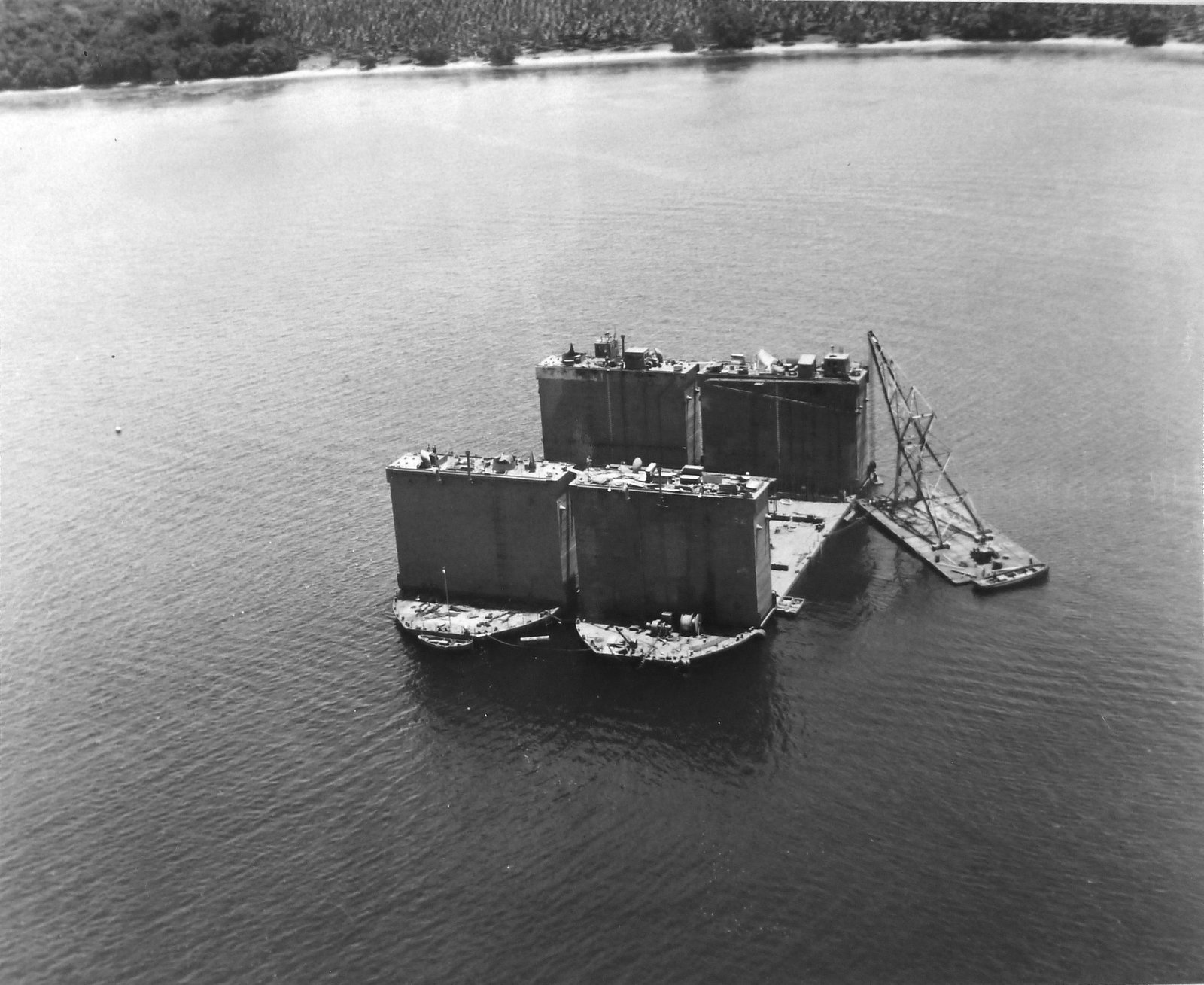
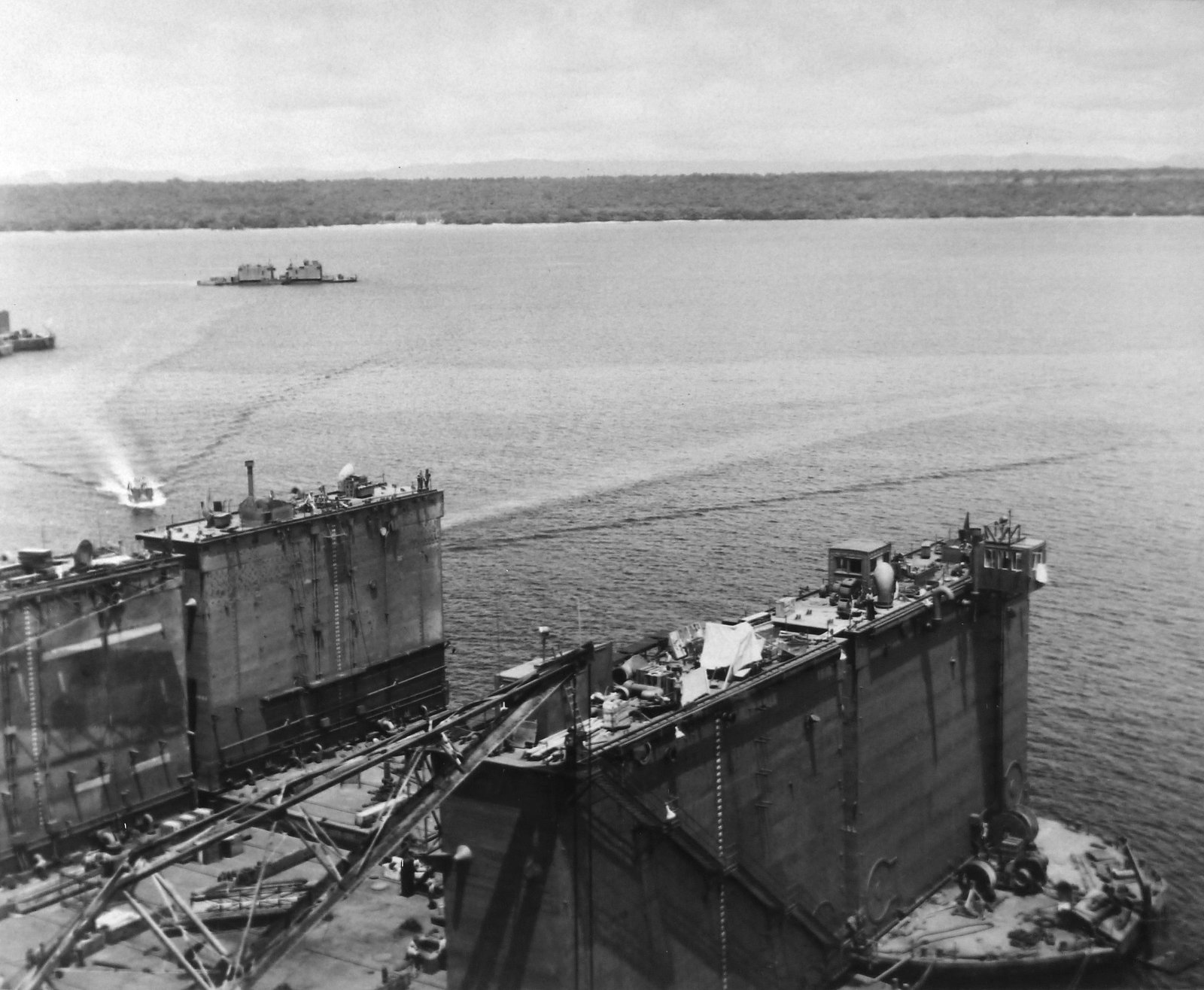
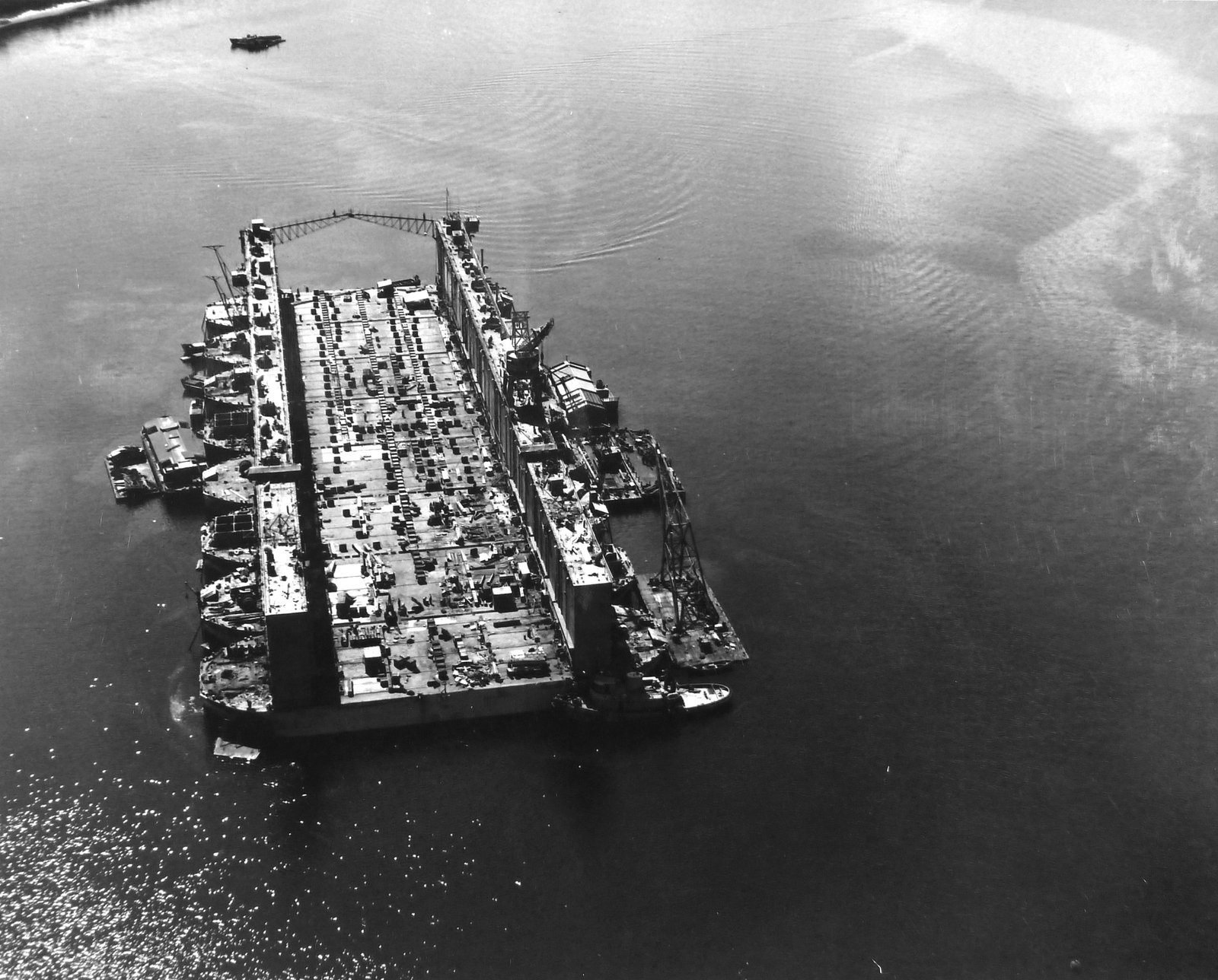
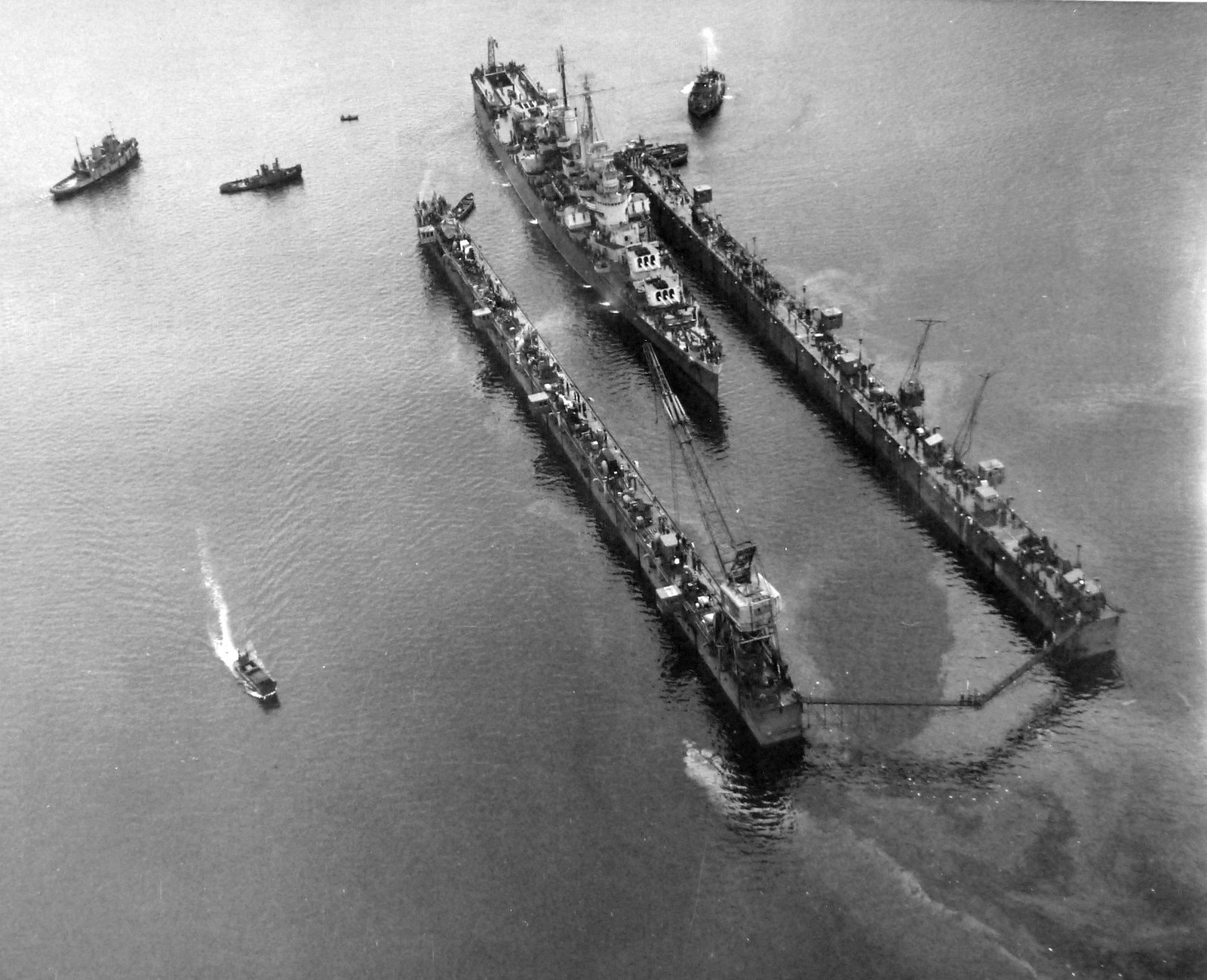
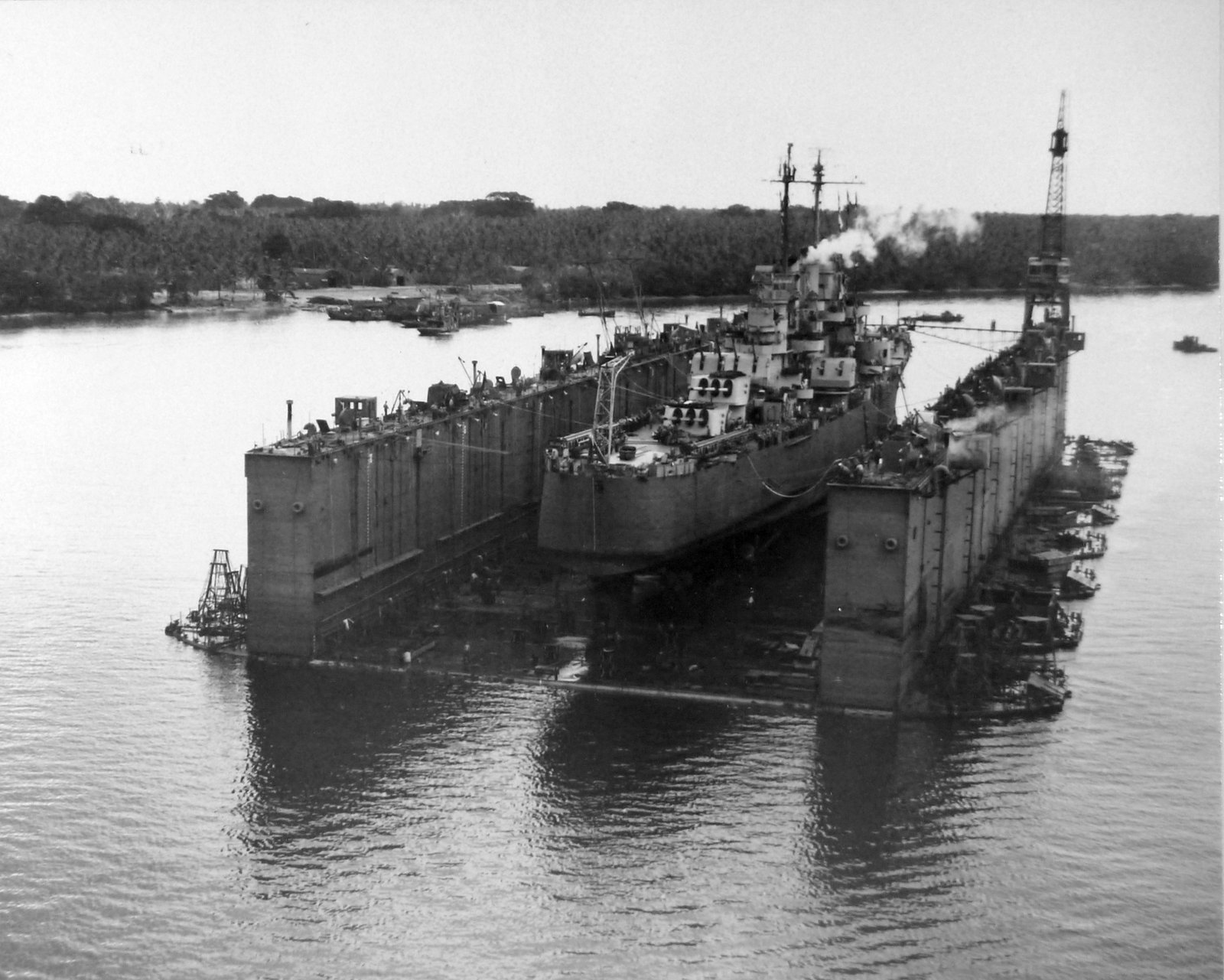
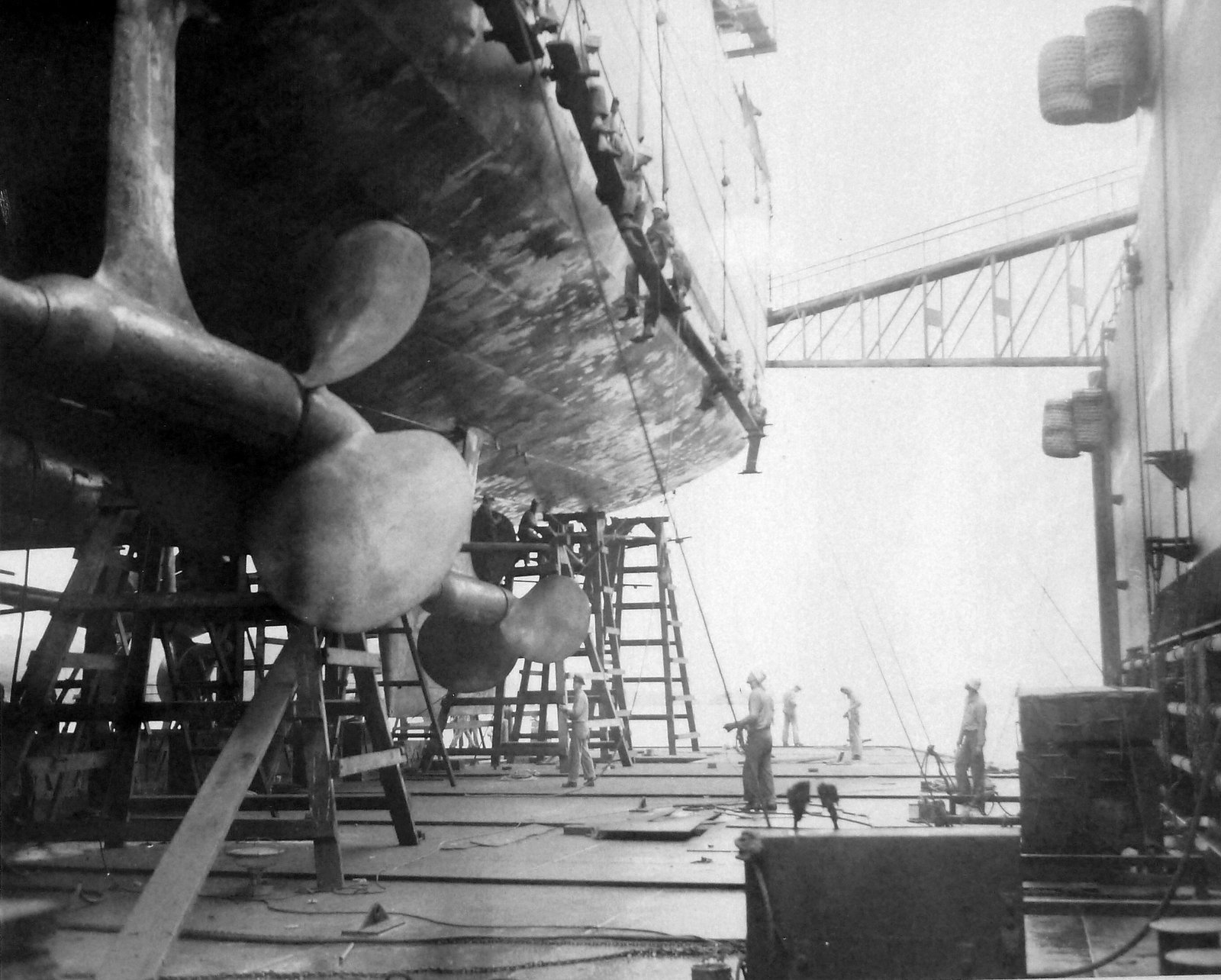
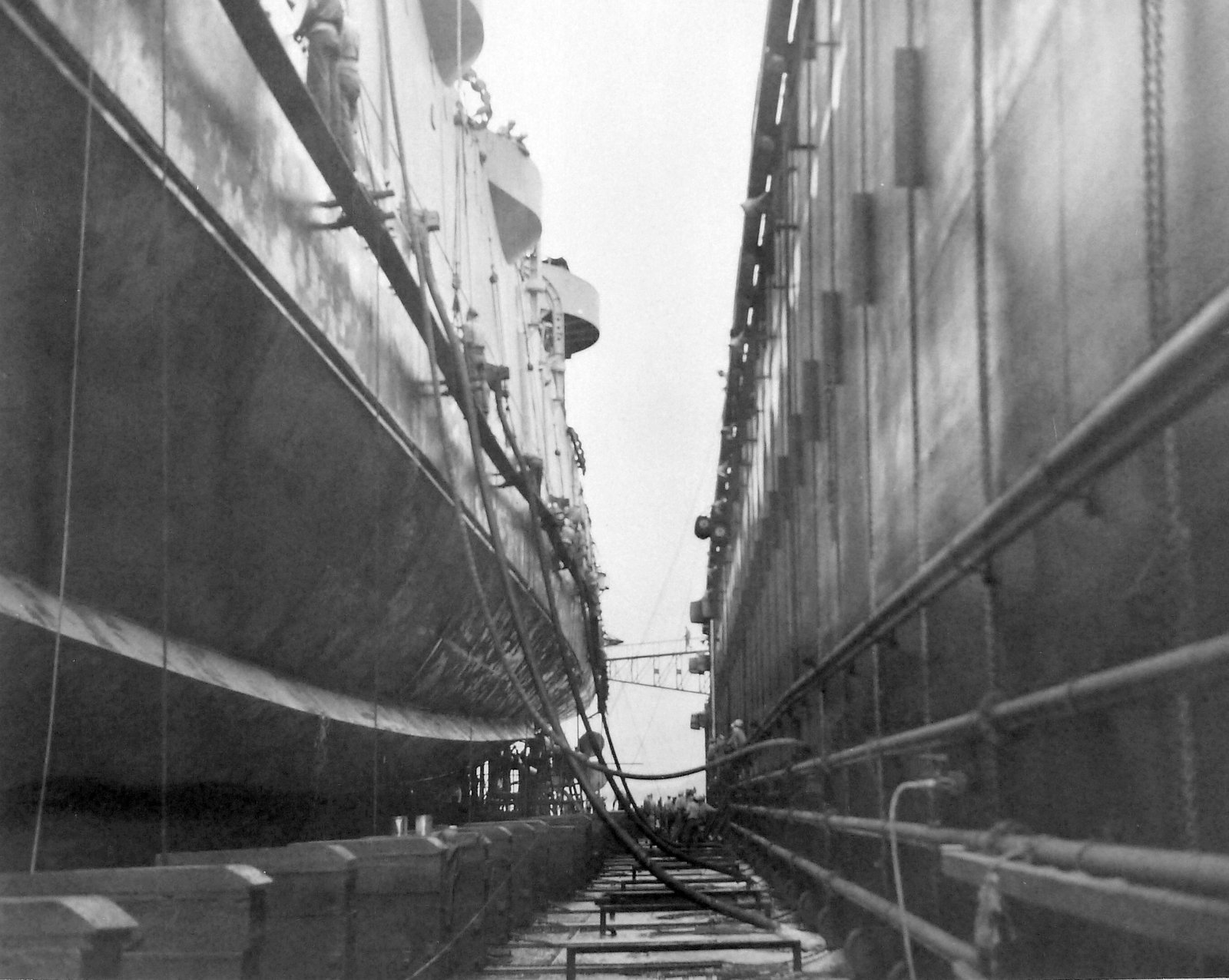
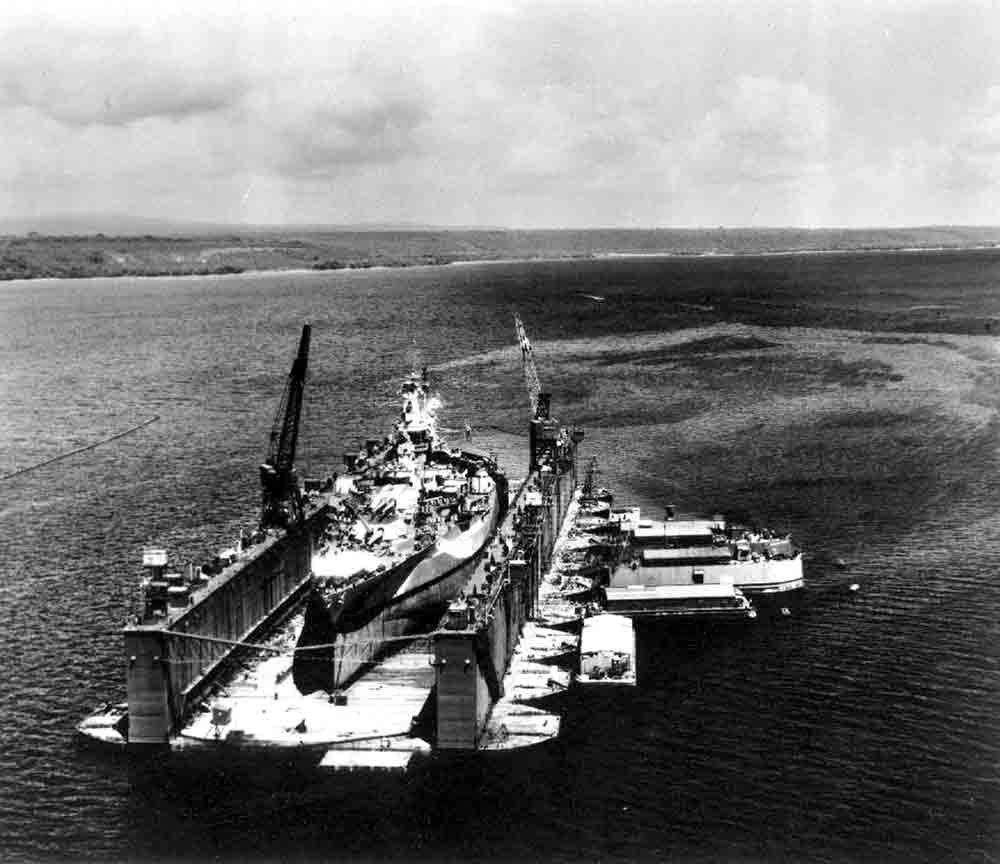
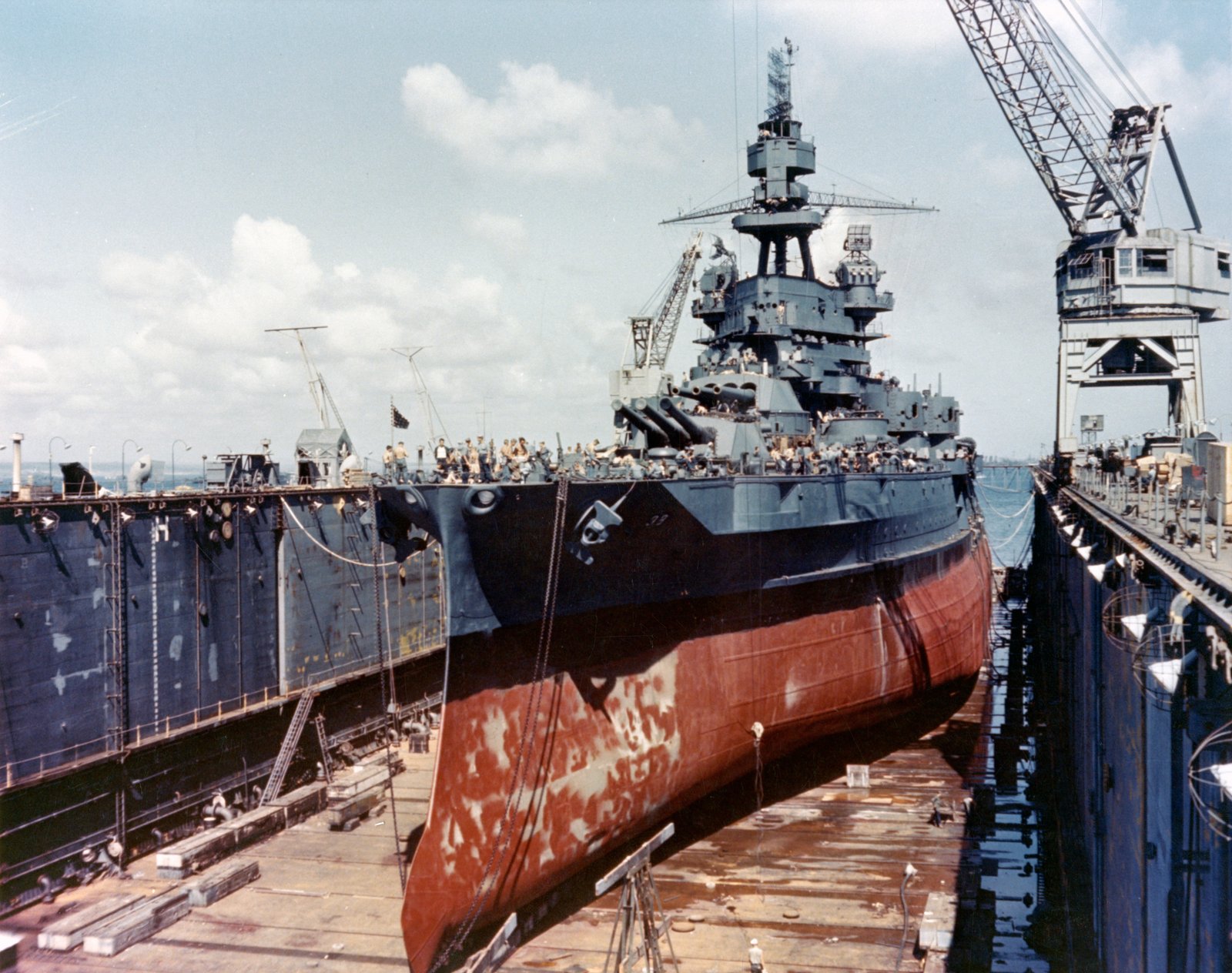
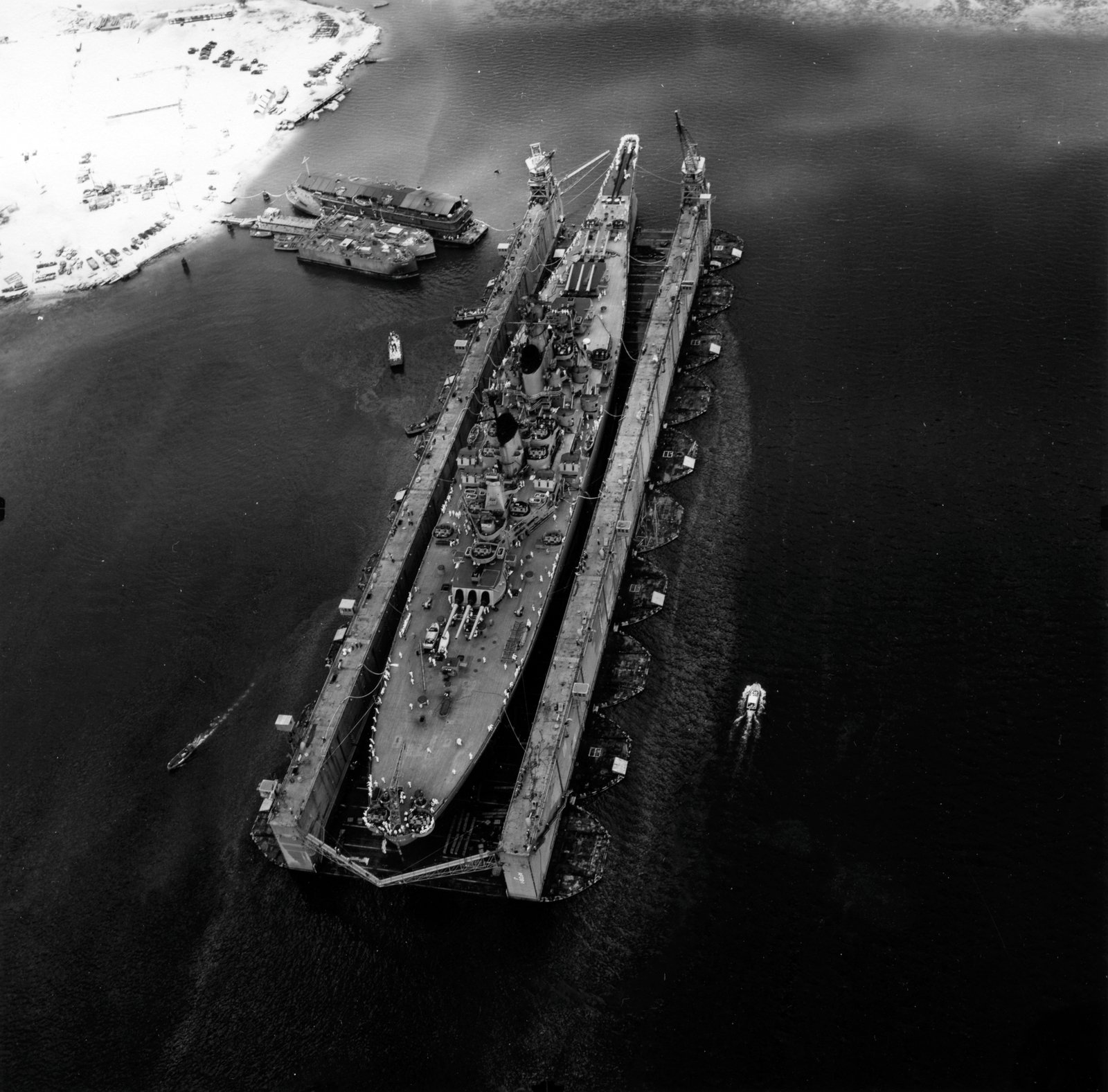
Of all the naval infrastructure established around Espiritu Santo during World War II, few matched the scale and complexity of the floating dry dock USS ABSD-1. This extraordinary piece of engineering was not simply large—it was vast, covering an area comparable to nearly eighteen Olympic swimming pools.
Its presence in Santo was driven by necessity. As the largest Allied naval base outside Hawaii, Espiritu Santo became a critical maintenance and repair hub for the Pacific Theatre. While routine repairs could be carried out alongside wharves, major structural work required ships to be taken out of the water—something that was impractical to achieve by returning to Hawaii or the United States during wartime operations.
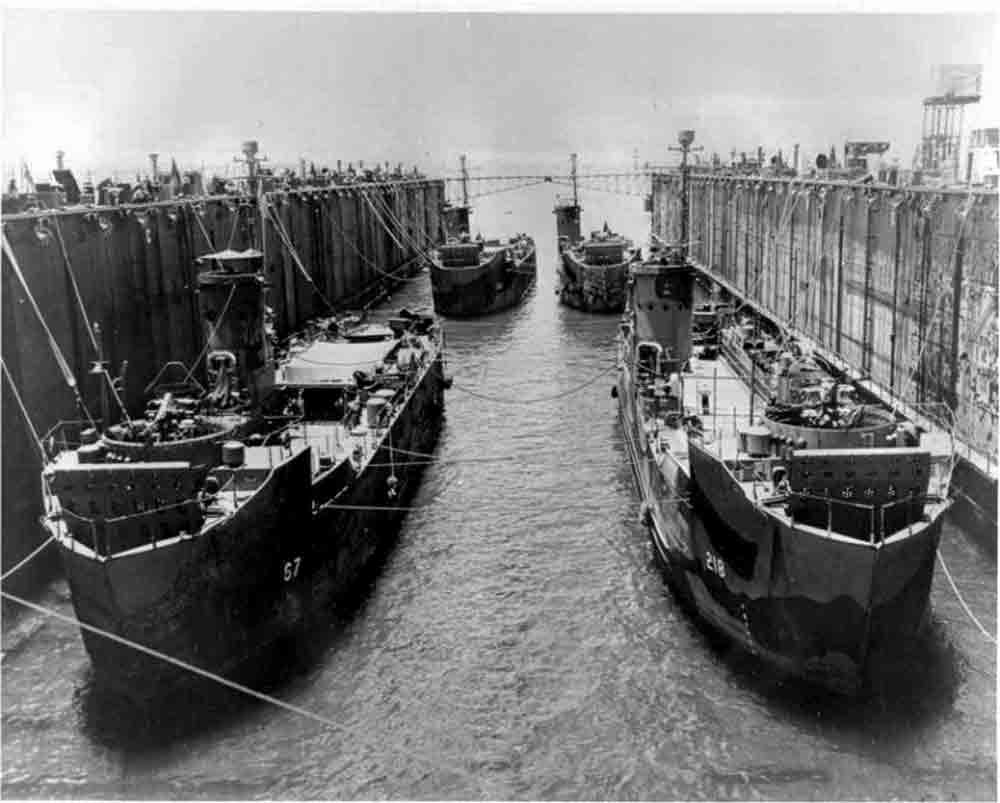
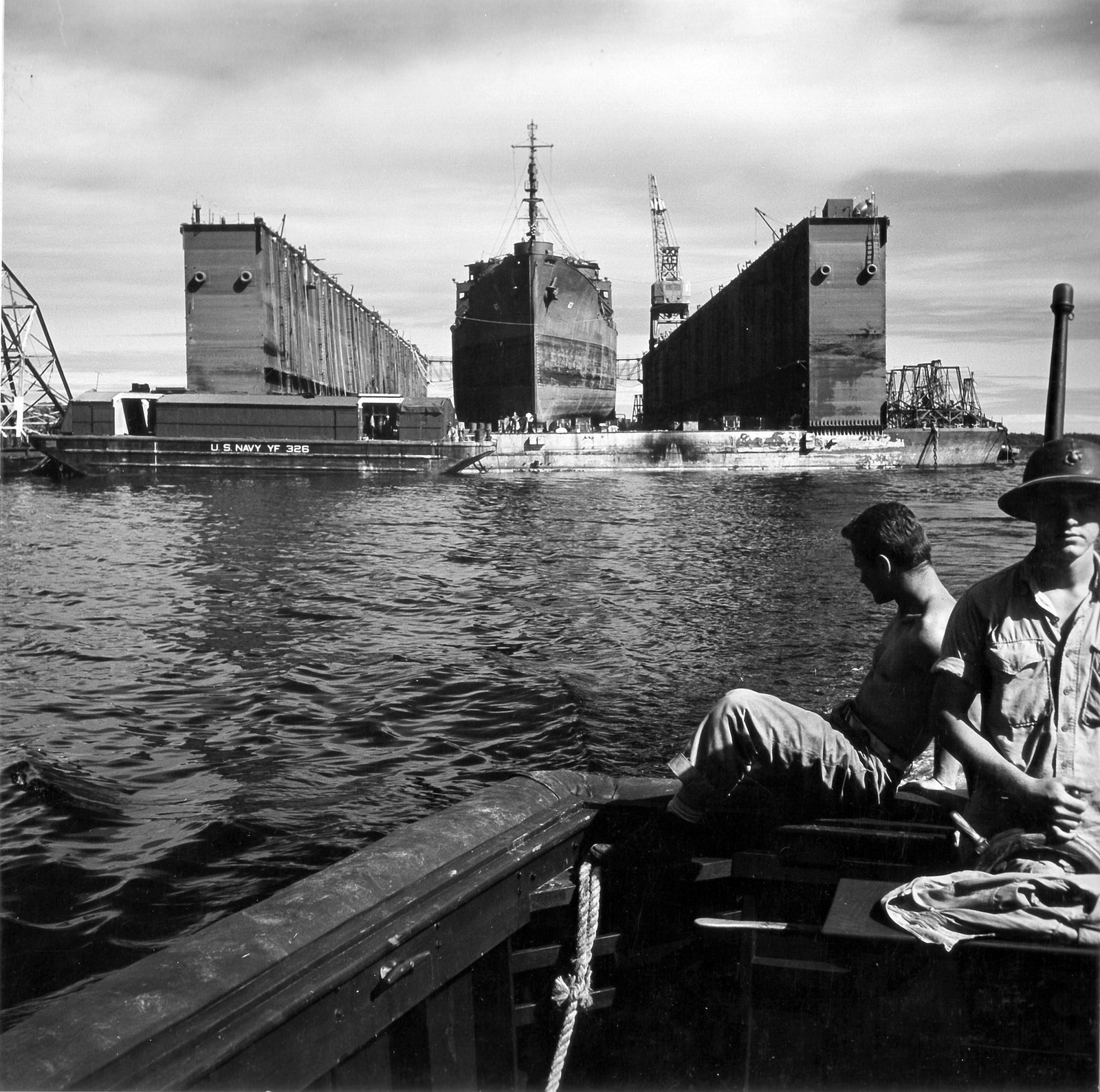
The solution was the deployment of floating dry docks. Two smaller docks were positioned in Segond Channel near Aore Island, while the far larger ABSD-1 was moored in the deep waters of Palikulo Bay. Together, they transformed Santo into a fully functioning forward repair base capable of servicing everything from small vessels to major warships.
From big to bigger
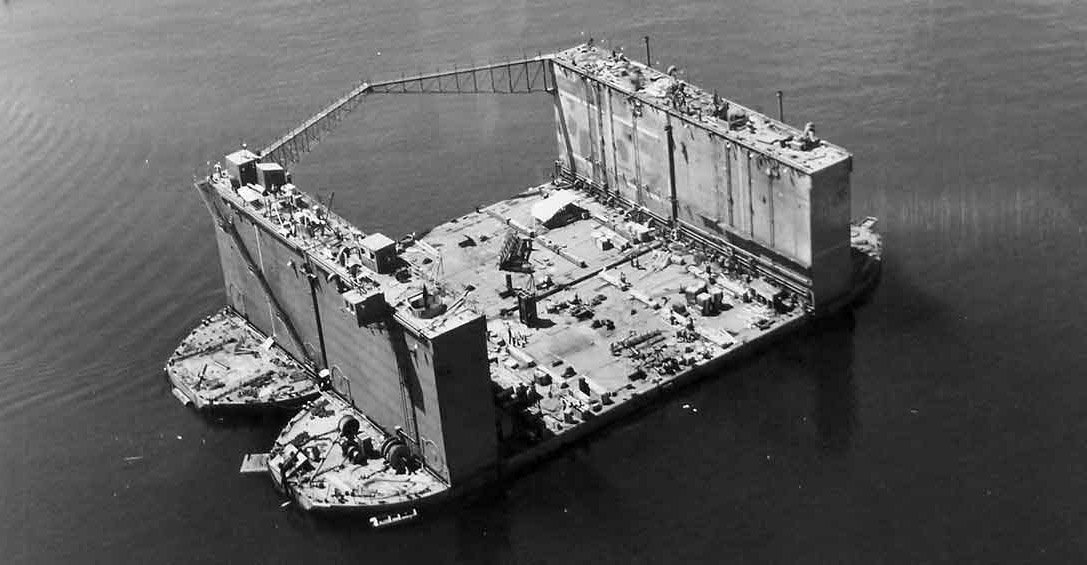
To meet operational demands, the U.S. Navy developed two classes of floating dry dock. The largest was designed to service aircraft carriers, battleships and major auxiliary vessels. This dock consisted of ten sections, each measuring 256 feet (78m) in length and 80 feet (24.3m) in width, with a lifting capacity of 10,000 tons per section.
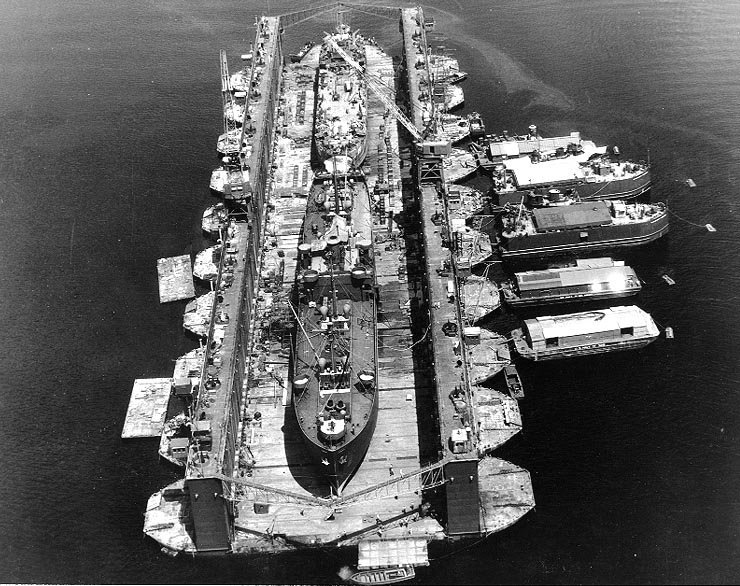
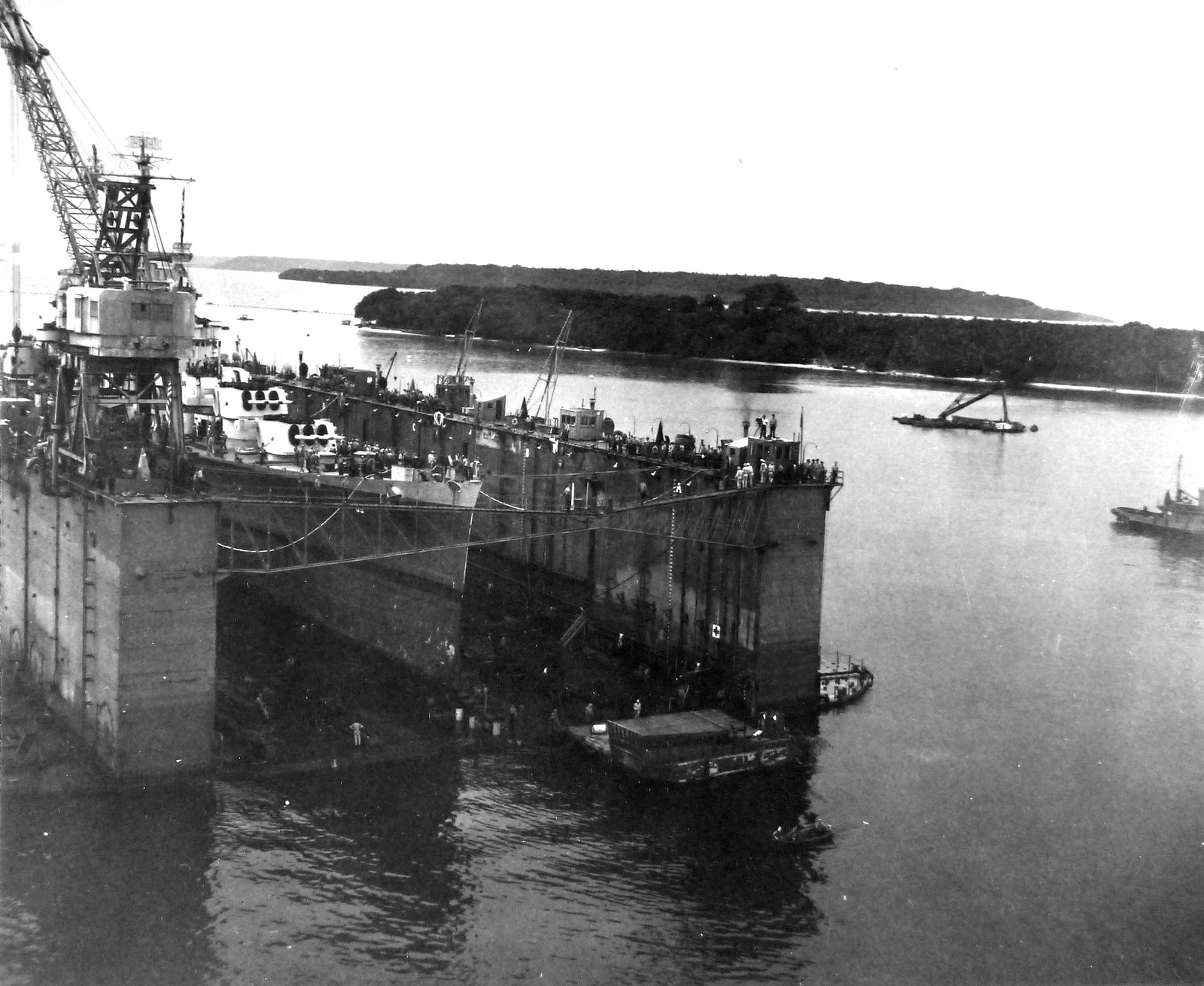
Once assembled, the completed structure measured an immense 927 feet (282.5m) in length and 256 feet (78m) in width. It provided an effective working length of 827 feet (252m), a clear internal width of 133 feet (40.5m), and a total lifting capacity of 90,000 tons.
The smaller dock consisted of seven sections, each 240 feet (73m) long and 101 feet (30.7m) wide, with a combined lifting capacity of 55,000 tons. While smaller in scale, it remained a substantial engineering achievement in its own right.
Ocean-going design
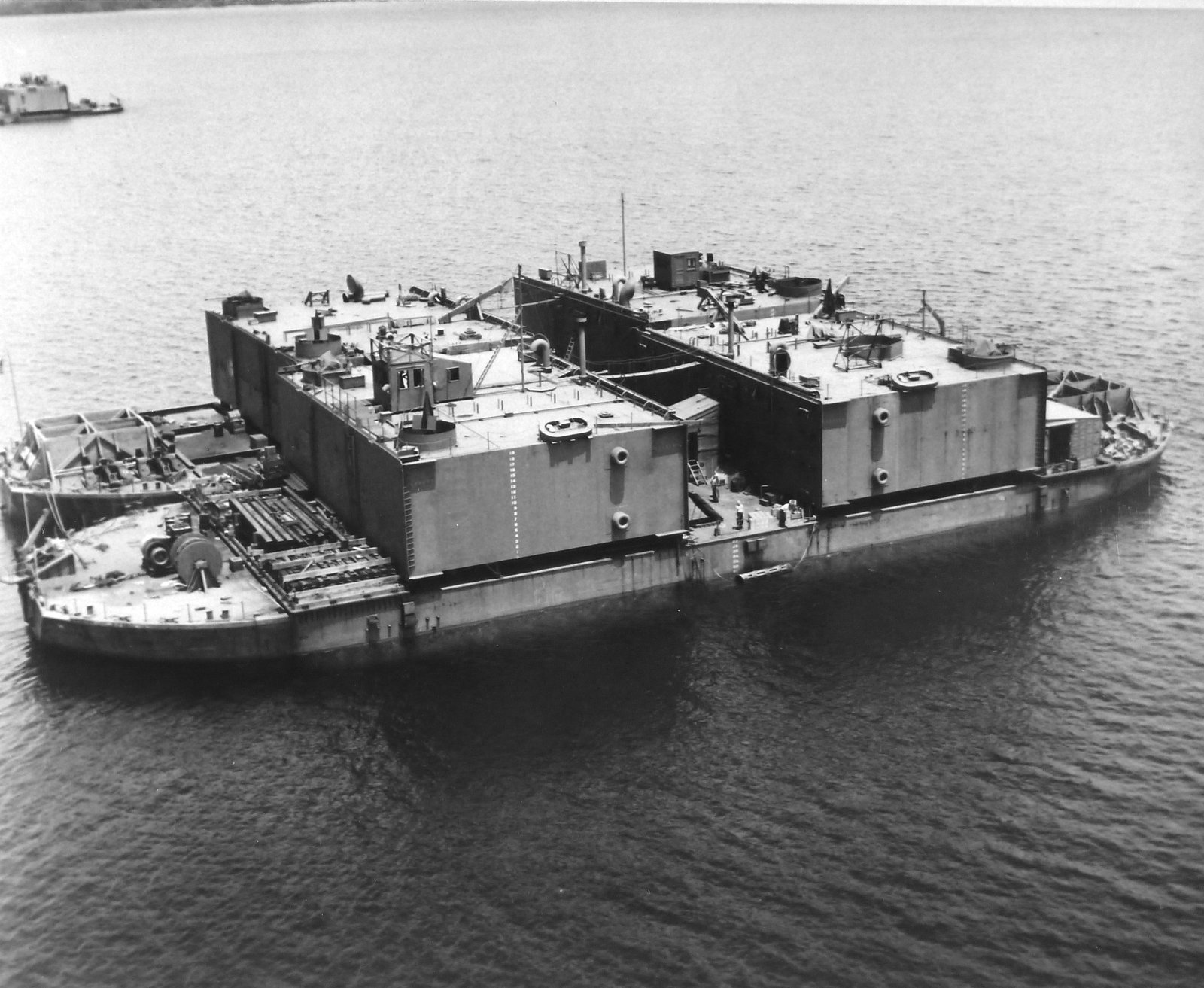
To enable transport across open ocean, the dry dock sections were engineered for towing. During construction, the wing walls were built upright, but before departure they were lowered horizontally using a hinged system. This reduced wind resistance and improved stability during transit.
Each section was shaped to resemble a ship’s hull, allowing it to be towed efficiently at speeds of six to eight knots. Once assembled, the flattened bow and stern sections created working platforms where support vessels could be moored alongside the dock.
Self-sufficient
Each section of the dock was equipped with two 525-horsepower diesel engines driving 350-kilowatt generators. These powered pumps, compressors, evaporators, and ventilation systems essential to dry dock operations. Despite this, the dock had no propulsion and relied on tugs for movement.
Once aligned, sections were welded together using heavy steel plates across all joints. The completed structure achieved remarkable strength, with a moment of resistance estimated at approximately 500,000 foot-tons—sufficient to support the largest vessels it was designed to service.
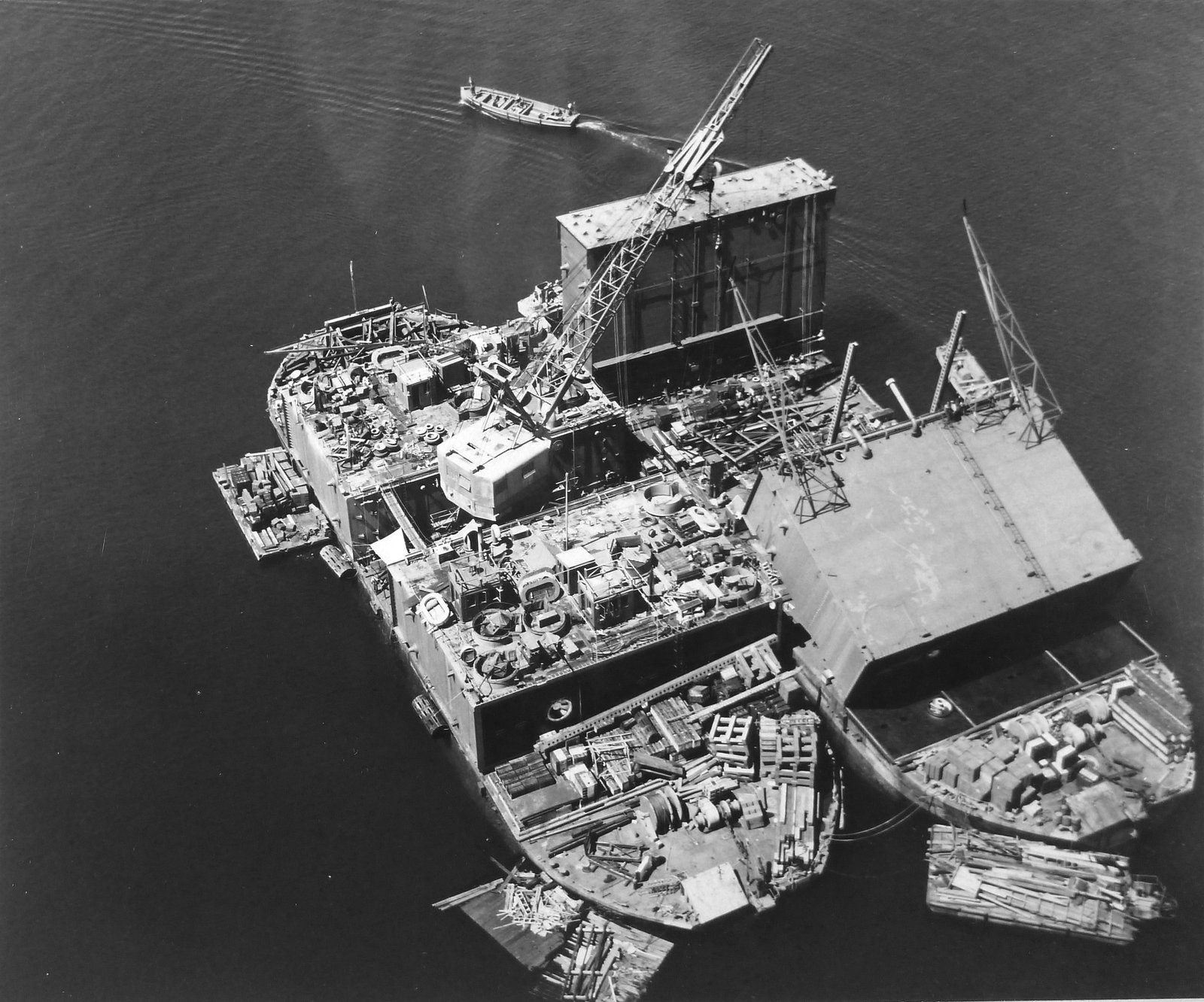
Assembled on site
The placement of ABSD-1 in Palikulo Bay was carefully chosen. The dock required a minimum depth of 80 feet (24.3m) to operate effectively, and its position was secured using 32 anchors, each weighing 15 tons, connected by 900 feet (274m) of chain.
The wing walls, rising 55 feet (16.7m) high, were divided into upper dry compartments and lower ballast tanks. These upper spaces were used for accommodation, workshops, storage and operational support.
Commissioned on 10 May 1943 at Everett, Washington under Captain Andrew R. Mack, the dock was transported to Santo in multiple sections. Two sections departed from Louisiana in July 1943, with the remaining eight leaving San Francisco in August.
Assembly began in late 1943, though not without incident. On 2 November, one section sank during construction, resulting in the loss of 13 crew. Despite this setback, eight sections were operational by the end of the year, with full assembly completed in April 1944.
Any ship you can imagine
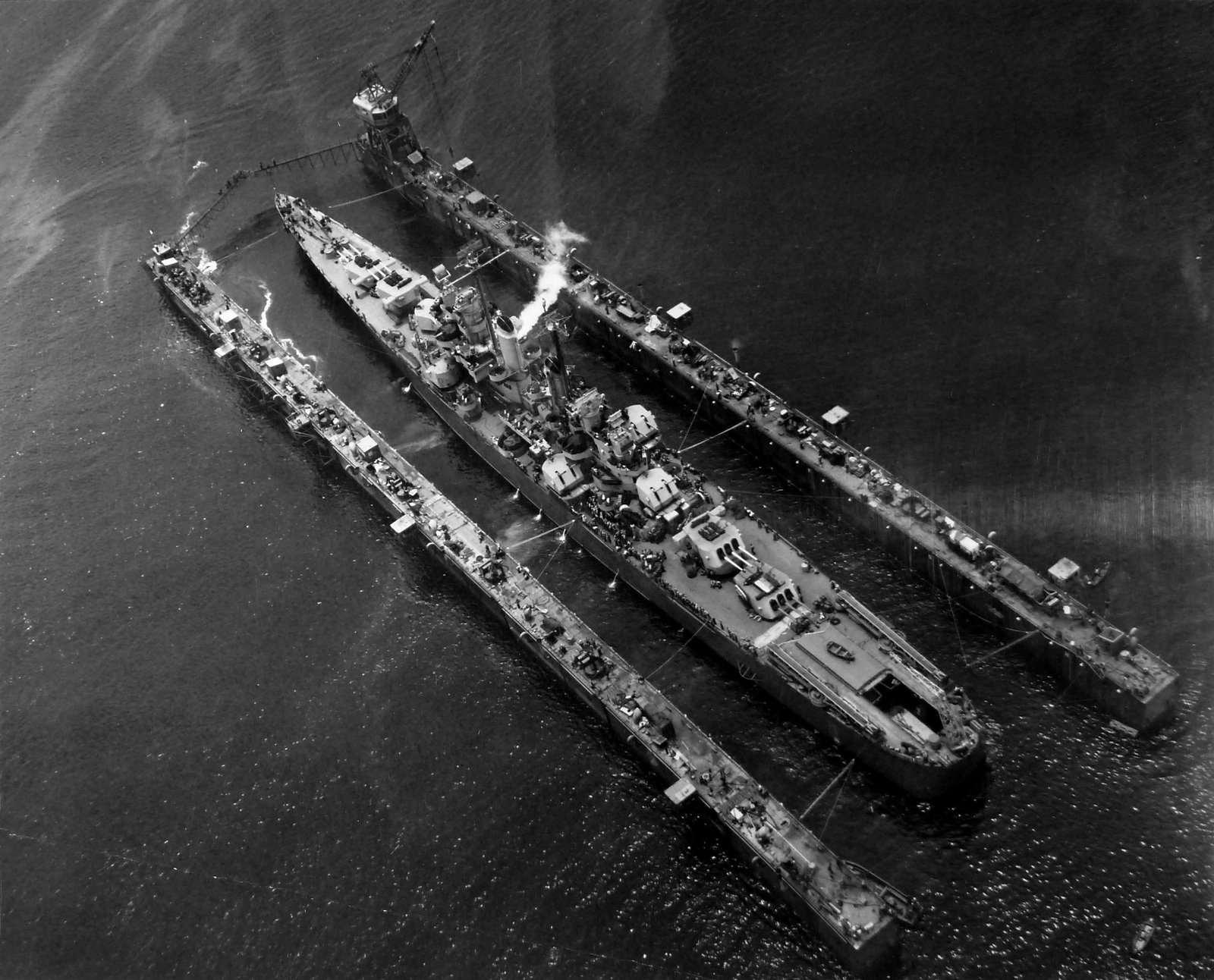
Each dock was equipped with rail-mounted cranes capable of lifting 15 tons, allowing heavy equipment and components to be moved efficiently across the structure. These cranes were positioned to accommodate the overhanging superstructures of large vessels.
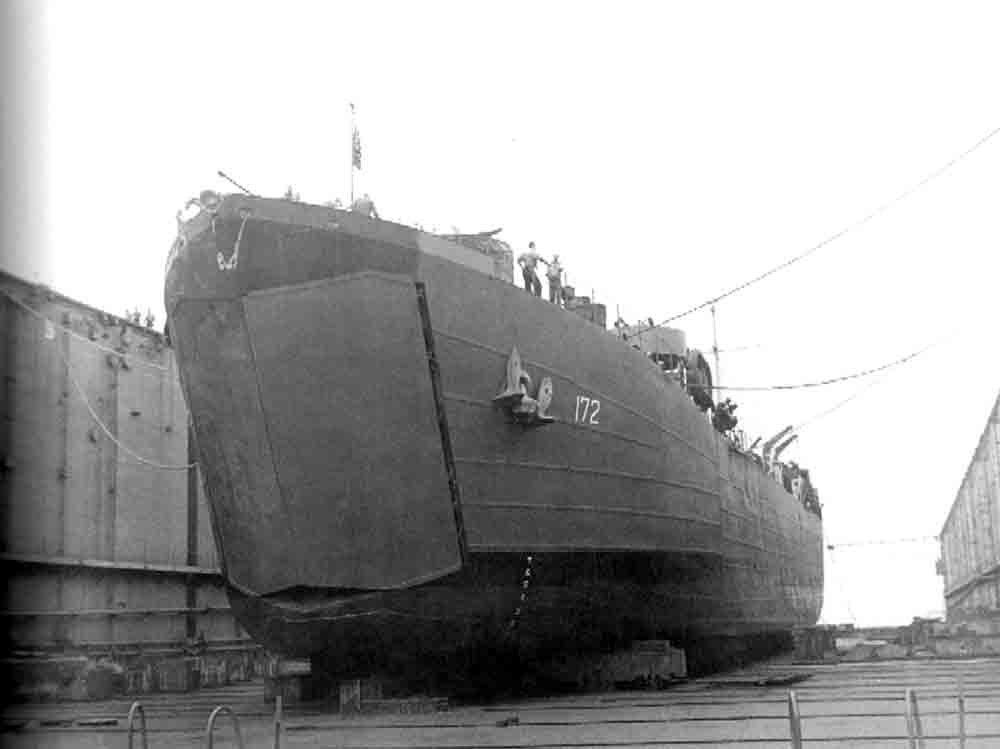
ABSD-1 serviced a wide range of ships during its time in Santo, including the battleships USS Idaho and USS California, as well as cruisers USS Cleveland and USS Columbia. Numerous smaller vessels, including landing ships and cargo carriers, were also repaired.
Post-war service
Following the war, the sections of ABSD-1 continued in service in various configurations. They were relocated, recommissioned and repurposed across multiple locations including Hawaii, Guam and the Philippines.
Several sections were used during the Korean War before eventually being transferred to the Philippines in 1970. Over time, sections were retired individually, with the final unit decommissioned in 1998—bringing to an end more than four decades of service in various forms.
Facts at a glance
Displacement: 38,500 tons
Length: 927 feet (283m)
Beam: 256 feet (78m)
Height: 9 feet flooded / 78 feet operational
Lifting capacity: 90,000 tons
Minimum operating depth: 80 feet (24.3m)
Power: 2 x 525-horsepower diesel engines driving 350-kilowatt generators.