Bradley Wood, a long-time resident of Espiritu Santo, received an extensive collection of World War II memorabilia from an American living on nearby Aore Island who was preparing to return home.
At the same time, the Lord Mayor of Luganville approached Bradley seeking an idea that could inspire the town and strengthen local tourism.
These two events sparked a conversation. Bradley brought together four like-minded residents — Dave Cross, Bill Widup, Jim Bennie and Mayumi Green — all united by a deep appreciation for Santo’s history and natural beauty.
It quickly became clear that any project should benefit the people of Santo and Vanuatu as a whole. The group focused on preserving and honouring the island’s remarkable World War II story.
Over the following months, they met with Peter Sakita of the Luganville council to explore possible directions. From these discussions, the idea of a World War II museum began to take shape.
The Perfect Location
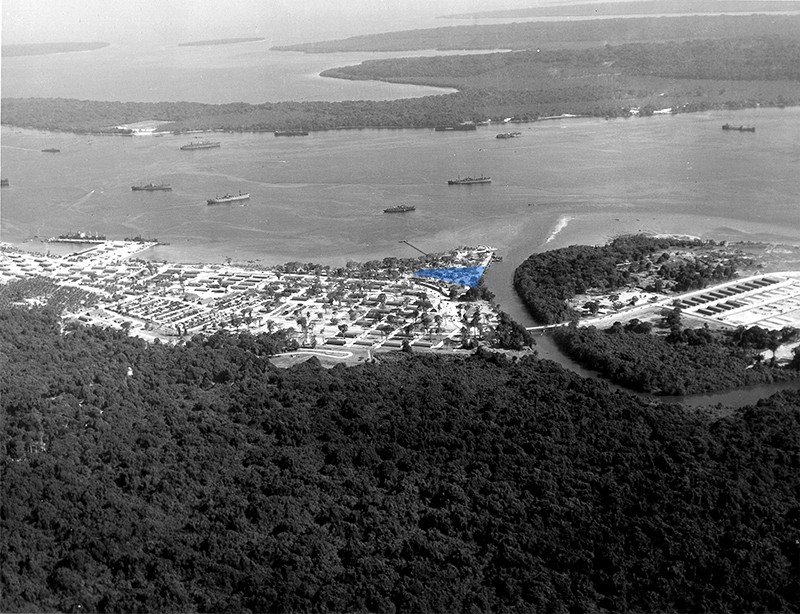
The South Pacific World War II Museum will be located at the mouth of the Sarakata River, on the western edge of Luganville.
During World War II, this area formed part of a vast United States Navy base. The historic photograph shows the scale of that wartime presence, with the blue shaded section marking the future museum site near the river.
To explore the area in more detail, click the image to view a high-resolution version. More photographs from Santo’s wartime history can be found in our Historical Gallery.
With the Stroke of a Pen
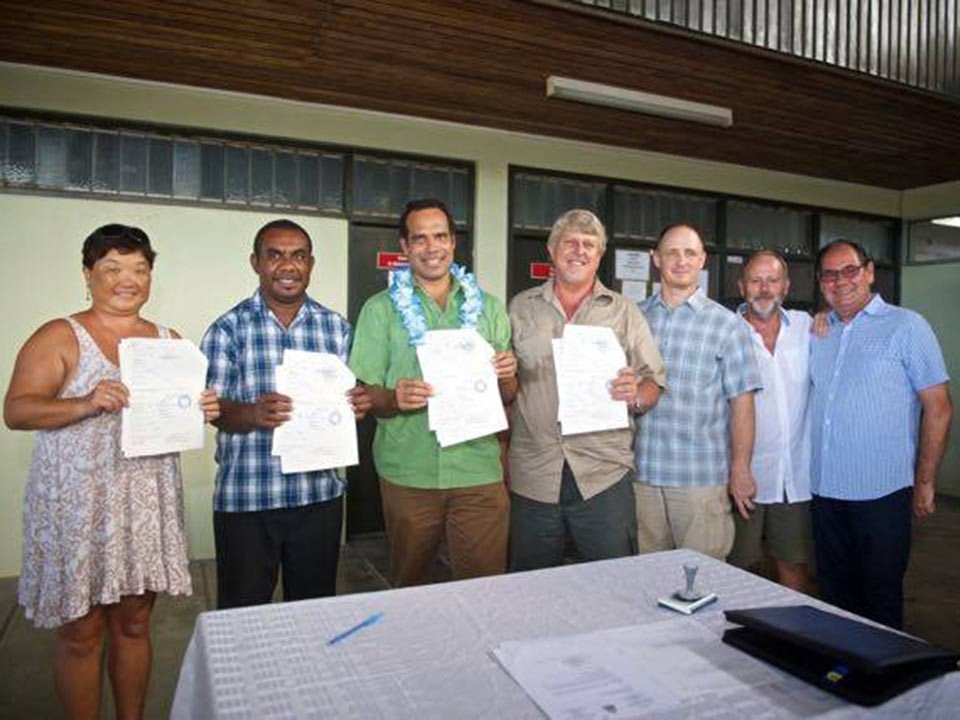
A milestone moment. Members of the South Pacific World War II Museum Committee gather at Luganville Town Hall to sign the lease for the museum site.
The agreement was formally signed by the former Minister of Lands, Hon. Ralph Regenvanu, representing the Government of Vanuatu, alongside Luganville Mayor Mr Onen Gaviga and Committee Chairman Bradley Wood.
To the left of Onen is Museum board member Mayumi Green. To the right of Bradley Wood are board members William Widup, Jim Bennie and Steven Turner.
Museum board members sign the lease at Luganville Town Hall, formalising the site for the South Pacific WWII Museum.